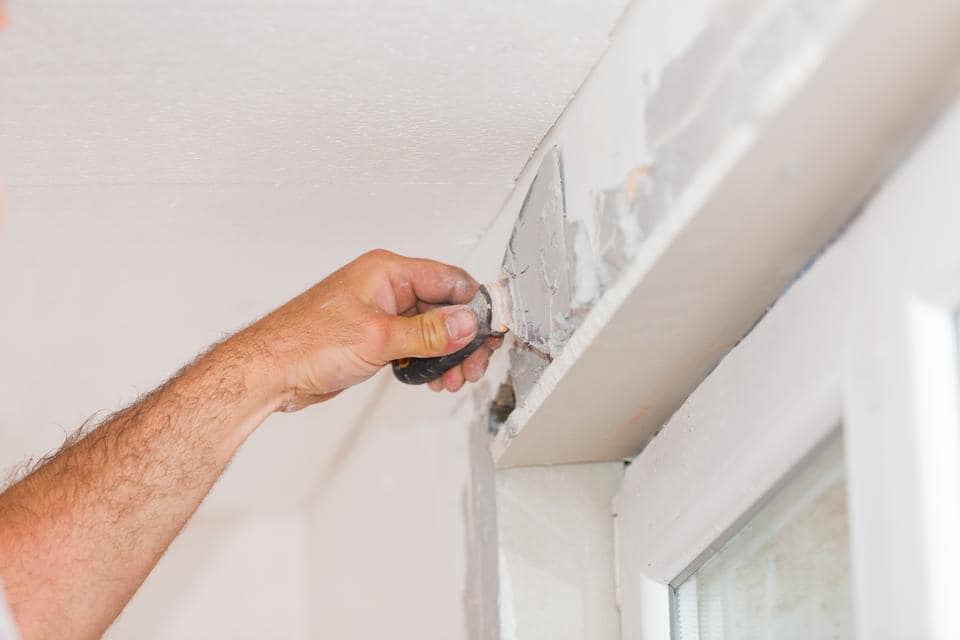
Expansion joints in drywall prevent the cracking that occurs when long runs of panels expand and contract. Knowing where to place them saves costly future repairs.
What Expansion Joints Are and Why They Matter
Drywall panels are rigid, but buildings are not. Every structure moves — expanding with heat, contracting with cold, shifting with wind loads, and settling with foundation movement. When long, continuous runs of drywall cannot accommodate this movement, stress accumulates at the weakest points and produces cracks. Expansion joints, also called control joints, are intentional breaks in the drywall surface that allow adjacent sections to move independently without transferring stress. They consist of a formed zinc or vinyl strip that creates a clean, straight line in the finished surface while maintaining a flexible gap beneath. Without them, walls and ceilings longer than approximately 30 feet will inevitably develop cracks, and those cracks will return after every repair. Homeowners and building managers in [Detroit](/locations/michigan/detroit) and [Grand Rapids](/locations/michigan/grand-rapids) with large open floor plans frequently encounter cracking that could have been prevented with properly placed expansion joints.
Where Building Codes Require Control Joints
Industry standards and building codes specify control joint placement based on the length and configuration of the drywall surface. The general rule is that control joints should be placed every 30 feet in either direction on walls and ceilings, at changes in ceiling height, where the framing changes direction, where wings or additions connect to the main structure, and at the junction between dissimilar wall or ceiling constructions. In practice, the specific requirements depend on the type of framing, the building's exposure to temperature extremes, and the ceiling height. Higher ceilings require more frequent control joints because the longer panels amplify movement. Many residential drywall installations skip control joints entirely because individual rooms are small enough not to require them, but open-concept homes, finished basements, and commercial spaces routinely exceed the thresholds.
How Expansion Joints Are Installed
Expansion joints are installed during the drywall hanging phase, before any taping or finishing begins. The drywall panels are hung with a deliberate gap — typically a quarter inch — at each control joint location. The control joint strip is then installed over the gap, with its flanges embedded in joint compound on each side. The strip creates a straight, clean line in the finished surface that is far more attractive than a random crack. Once the flanges are covered with compound and finished smooth, the control joint appears as a thin, subtle line that most people never notice. The critical detail is that the joint must extend through any framing blocking behind it — if the drywall is free to move but the backing is rigid across the joint, the joint cannot function properly.
Retrofitting Expansion Joints in Existing Walls
Adding an expansion joint to an existing wall that is already cracking from lack of one is a viable repair option. The process involves cutting a straight line through the drywall at the desired joint location, removing a strip of material to create the necessary gap, and installing a control joint strip in the opening. This is more involved than a simple crack repair, but it provides a permanent solution to recurring cracking in long wall or ceiling runs. The finished appearance is a clean, straight line that looks intentional and professional. For homeowners in [Ann Arbor](/locations/michigan/ann-arbor) and [Lansing](/locations/michigan/lansing) who have repaired the same cracks multiple times, retrofitting a control joint at the crack location eliminates the problem permanently.
Common Mistakes That Cause Expansion Joint Failure
Even properly specified expansion joints can fail if installation details are overlooked. Fastening drywall across the joint — driving screws through panels on both sides of the joint into the same framing member — locks the joint in place and prevents it from functioning. Using rigid joint compound or tape across the joint negates its flexibility. Installing the control joint strip without a proper gap beneath it leaves no room for movement. Running electrical, plumbing, or other rigid connections across the joint inside the wall cavity restricts panel movement at that point. Our [drywall installation](/services/drywall-installation) team ensures that every control joint functions as designed by verifying clearances and isolating the joint from rigid attachments.
Residential Applications for Expansion Joints
While expansion joints are most commonly associated with commercial construction, several residential situations benefit from them. Open-concept living areas with wall or ceiling runs exceeding 30 feet need control joints to prevent cracking. Finished basements, where temperature differentials between the concrete foundation and the heated living space create significant thermal movement, benefit from control joints at wall-to-ceiling transitions. Home additions where new construction meets existing structures should have control joints at the junction to accommodate differential settling. Long hallways, especially in ranch-style homes, often develop recurring mid-span cracks that a control joint would prevent. Homeowners in [Warren](/locations/michigan/warren) and [Sterling Heights](/locations/michigan/sterling-heights) planning renovations should discuss control joint placement with their contractor to prevent future cracking in large, open spaces.
Need Professional Drywall Help?
Contact Fast Fix Drywall Repair for a free estimate on your next project.
Get a Free QuoteLooking for drywall repair services in your area? Browse our full service directory by city.