Every electrical and plumbing renovation leaves drywall damage in its wake. Proper closure and finishing restore your walls to their pre-renovation condition.
Why Trades Work Requires Drywall Restoration
Electricians and plumbers need access to wall and ceiling cavities to run wires, install pipes, and connect fixtures. This access means cutting into your drywall — sometimes strategic openings at specific points, sometimes long channels chased through wall surfaces, and occasionally removal of entire sections to reach difficult areas. After the trades work is complete and inspected, these openings need to be properly closed, finished, and blended with the surrounding surfaces. The quality of this closure work determines whether your renovation looks polished and professional or leaves visible scars across your walls and ceilings. Homeowners in [Columbus](/locations/ohio/columbus) and [Cleveland](/locations/ohio/cleveland) often discover that the drywall restoration phase of a renovation takes as long as the original trades work — proper finishing cannot be rushed.
Coordinating Drywall Work with Trades and Inspections
Timing is critical when restoring drywall after electrical or plumbing work. The wall cavities must remain open until the work passes inspection — closing them up prematurely means cutting them open again if the inspector finds issues. Once inspections are approved, insulation is replaced or upgraded in the opened cavities before drywall closure begins. If the trades work involved moving outlets, adding switches, or relocating plumbing fixtures, old openings need to be patched and new openings need clean cutouts. Planning the sequence — trades work, inspection, insulation, drywall closure, finishing — prevents rework and ensures each step builds on the last.
Closing Access Openings Properly
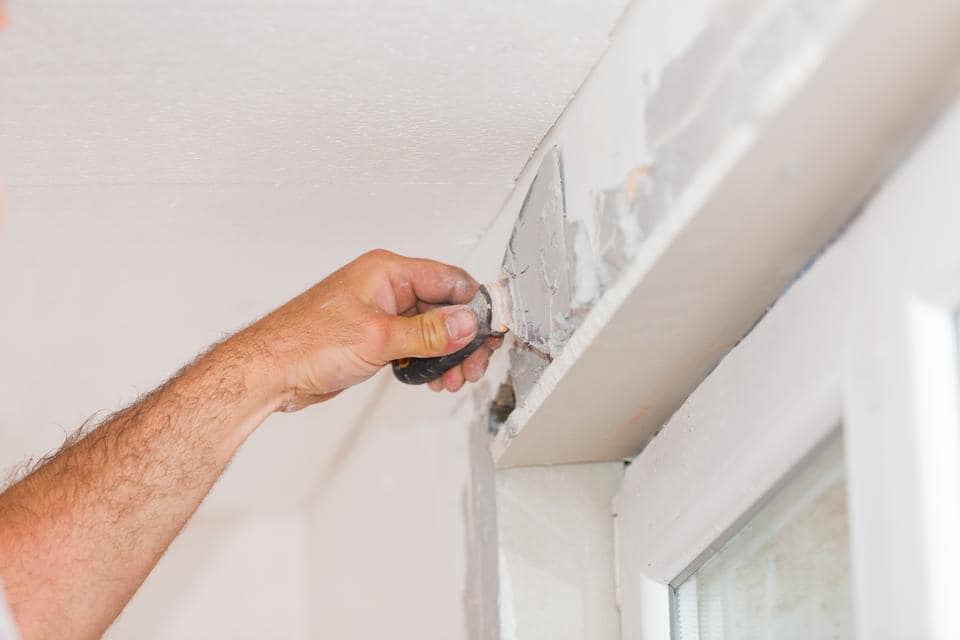
The method for closing drywall access openings depends on their size and location. Small openings cut for fishing wires — typically a few inches square — can be patched with a standard drywall patch and compound. Larger openings that expose one or two stud bays require a replacement piece of drywall cut to fit the opening and fastened to the exposed studs. Very large openings where entire sections of drywall were removed are handled by hanging new full or partial sheets. In all cases, the repair drywall should match the existing material in type and thickness. Our [drywall repair](/services/drywall-repair) team in [Cincinnati](/locations/ohio/cincinnati) and [Dayton](/locations/ohio/dayton) works directly with electricians and plumbers to schedule closure work immediately after inspections, minimizing the time your walls remain open.
Handling Wire and Pipe Chases
When electricians or plumbers cut channels — or chases — into the face of drywall to run wiring or piping along the surface before covering it, the repair requires careful attention. The chase is typically a narrow groove cut into the drywall surface, with the wire or pipe laid in the groove and then covered with joint compound or a strip of drywall. For compound-only coverage, apply fiberglass mesh tape over the chase before the first coat of compound to prevent cracking along the linear repair. Build up the compound in thin coats, feathering each one wider than the last. For chases deeper than a quarter inch, a strip of drywall shimmed to match the surrounding surface profile produces a stronger, more durable repair.
Matching Textures Across Multiple Repair Points
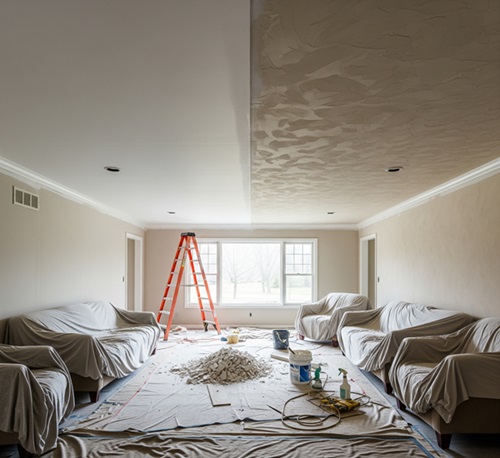
Renovation drywall work typically involves repair points scattered across multiple walls and ceilings in the same room. Achieving consistent texture matching across all these points is essential for an invisible result. The most efficient approach is to complete all patching and compound work first, then apply texture to all repaired areas in a single session. This ensures consistent compound consistency, spray pattern, and application technique across every repair. If the room has a difficult texture to match — a vintage pattern or hand-applied finish — consider re-texturing the entire surface for uniformity. Our [drywall finishing and texturing](/services/drywall-finishing-texturing) team coordinates all post-renovation finishing to deliver seamless, uniform results across every repair point in the room.
Ensuring Fire Rating Integrity After Trades Work
Electrical and plumbing penetrations through fire-rated wall and ceiling assemblies must be properly sealed to maintain the fire rating. This is a code requirement that is often overlooked during drywall restoration. Every hole, cutout, and penetration in a fire-rated assembly — including those for electrical boxes, conduits, pipes, and ducts — must be sealed with fire-rated caulk, putty, or intumescent material rated for the specific assembly type. Simply patching the drywall surface over a penetration without fire-stopping the gap around the pipe or wire inside the cavity does not restore the fire rating. Homeowners in [Toledo](/locations/ohio/toledo) and [Akron](/locations/ohio/akron) should verify that fire-stopping is included in the drywall restoration scope for any work that involves penetrations through garage walls, multi-family separation walls, or other fire-rated assemblies.
Need Professional Drywall Help?
Contact Fast Fix Drywall Repair for a free estimate on your next project.
Get a Free QuoteLooking for drywall repair services in your area? Browse our full service directory by city.