Plumbing leaks leave drywall stained, warped, and often hiding hidden mold. This guide covers safe drying, replacement, and refinishing for walls and ceilings damaged by water.
Why Plumbing Leak Damage Demands a Careful Repair
When a plumbing leak hits drywall, the visible damage is usually the smallest part of the problem. By the time you see a brown ring on the ceiling or a soft spot on the wall, water has already migrated through the gypsum core, soaked into framing, and possibly traveled along electrical wiring or HVAC ducting. Painting over the stain is the worst thing you can do — it traps moisture, accelerates mold growth, and hides the warning signs. Proper drywall repair after a plumbing leak starts with the plumbing itself. If the source isn't fixed, no amount of patching will solve the problem. Once the plumbing is repaired and the wall is fully dry, the drywall work can begin. Whether you're dealing with a slab leak in a <a href="/locations/arizona/phoenix">Phoenix</a> ranch or a frozen pipe burst in a <a href="/locations/minnesota/saint-paul">Saint Paul</a> bathroom, our <a href="/services/water-damage-repair">water damage drywall repair</a> team understands what to look for and how to restore the wall properly.
Step 1: Confirm the Leak Is Fully Repaired
Before any drywall work, the plumbing leak must be completely fixed and tested. Patching a wall over an unresolved leak is throwing money away. **Verification checklist:** 1. **Have the plumber pressure test the line** after the repair. A static water meter test (turn off all fixtures, watch the meter for 30 minutes) catches slow leaks. 2. **Run the system at full pressure** for an extended period and recheck the area for moisture. 3. **Check adjacent rooms and floors** for secondary damage — water often travels laterally before becoming visible. 4. **Use a moisture meter** to confirm the wall cavity is fully dry. Surface readings should match unaffected areas of the same wall. 5. **Document with photos** if insurance is involved. Skipping this step is the most common reason drywall repairs fail. The wall might look fine for weeks before fresh stains reappear, signaling that the original leak (or a new one) is still active. Insurance adjusters in <a href="/locations/florida/tampa">Tampa</a> and <a href="/locations/texas/houston">Houston</a> often deny secondary claims when this verification wasn't done.
Step 2: Dry the Wall Cavity Completely
Drywall absorbs water like a sponge, and wet drywall can take days or weeks to dry naturally — far too long to prevent mold growth, which begins within 24–48 hours. **Accelerated drying methods:** - **Cut access holes** in the drywall at the lowest point of the damaged area to drain trapped water and improve airflow. - **Set up air movers** (high-velocity fans designed for restoration work) pointed at the wall cavity for 24–72 hours. - **Run a dehumidifier** in the room continuously, draining the collection tank as needed. - **Use a moisture meter** daily to track drying progress. The wall is dry when readings consistently match unaffected drywall. For minor leaks, opening up small inspection holes and running a household fan may be enough. For larger leaks, professional restoration equipment is required to prevent mold and structural damage. Do not seal up the wall until moisture readings confirm complete drying. Trapped moisture in wall cavities is the leading cause of post-repair mold problems.
Step 3: Assess and Remove Damaged Drywall
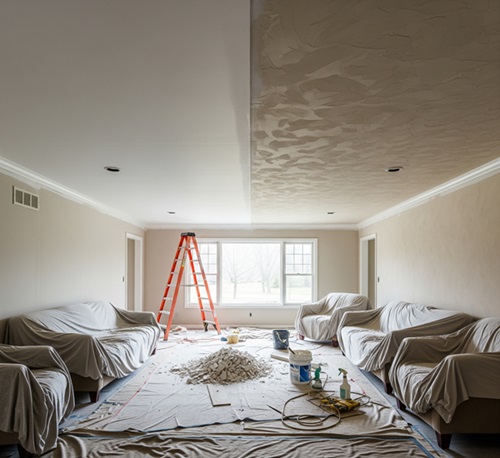
Once the cavity is dry, evaluate the drywall to decide what to keep and what to replace. **Replace any drywall that shows:** - Visible sagging or bulging - Soft spots when pressed firmly - Crumbling at the edges of the damaged area - Mold growth, even small spots - Persistent staining after the wall is dry **Keep and repair drywall that has:** - Light surface staining only - Solid feel with no softness - No mold growth - No structural deformation When in doubt, replace it. Drywall that has been wet and dried multiple times loses structural integrity even if it looks intact. **Removal process:** 1. **Cut along stud centers** using a drywall saw or oscillating multi-tool, removing full bays of damaged material. 2. **Score along ceiling and floor lines** to prevent tearing adjacent material. 3. **Bag and dispose of removed drywall** in heavy-duty contractor bags, especially if mold was present. 4. **Inspect framing and insulation** for moisture or mold. Replace any insulation that was wet — fiberglass and cellulose lose their R-value permanently when wet. This is where many DIY repairs fall short. Cutting a small patch around a brown stain leaves wet, compromised drywall in place around the patch, leading to repeat failures within months. Our crews in <a href="/locations/california/san-diego">San Diego</a> and <a href="/locations/colorado/denver">Denver</a> always remove full bays during water damage repairs.
Step 4: Treat Framing and Prevent Mold
Exposed framing should be inspected and treated before new drywall is installed. **Framing inspection:** - **Check moisture content** with a pin-type moisture meter. Studs should read below 16% before being closed up. - **Look for mold growth** on stud faces. Surface mold can be cleaned; deep mold requires stud replacement. - **Verify structural soundness** — water-damaged framing can rot internally even when surfaces look fine. Press a screwdriver into questionable areas to test. **Mold prevention:** - **Clean affected framing** with a 10% bleach solution or commercial mold cleaner, following label directions for ventilation and contact time. - **Apply a mold-inhibiting primer** (Kilz, Zinsser Mold Killing Primer, or similar) to all exposed framing in the damaged area. - **Replace damaged insulation** with new material. Fiberglass batts are most common; consider mineral wool for higher fire and moisture resistance. - **Install moisture-resistant (green) drywall** in any area with elevated humidity, such as bathroom walls or laundry rooms. These steps add modest cost and time to the repair but prevent thousands of dollars in mold remediation later.
Step 5: Install, Finish, and Prime the New Drywall
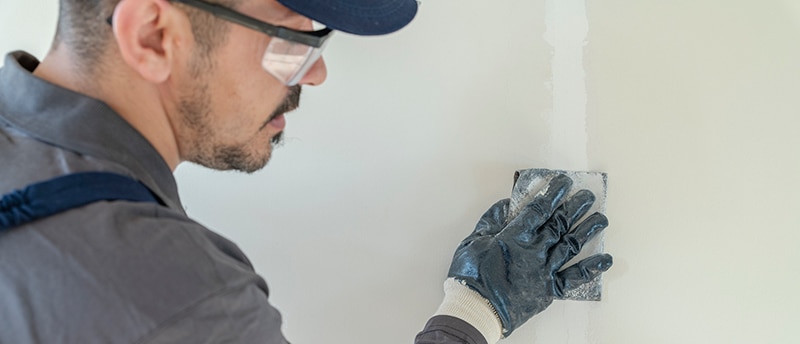
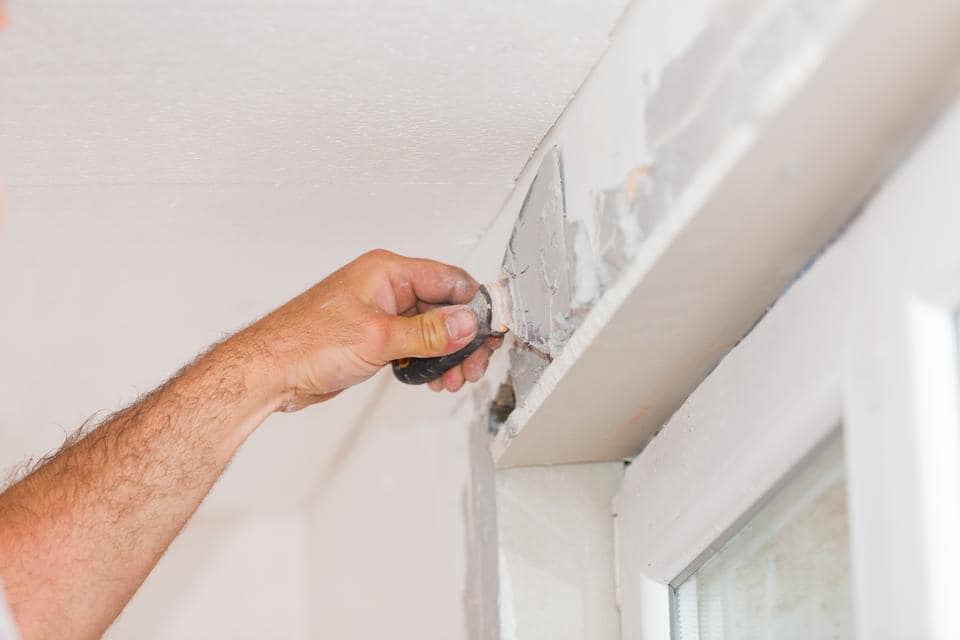
With the cavity dry and framing prepared, install fresh drywall and finish it to match the surrounding wall. **Installation:** 1. **Cut new drywall** to fit the opening with a 1/8 inch gap on all sides. 2. **Screw into framing every 12 inches** along studs and 8 inches at edges. Drive screws just below the paper face without breaking through. 3. **Tape all seams** with paper or mesh tape and apply three coats of joint compound, feathering each one wider. 4. **Sand smooth** with 120-grit, then 220-grit for a final pass. **Critical priming step:** Use a stain-blocking primer over the entire repair area, even on new drywall, before painting. Water stains can bleed through standard primer and topcoat — only oil-based or shellac-based stain blockers reliably seal them off. Kilz Original, Zinsser BIN, and Zinsser Cover Stain are all effective options. If any portion of the existing wall still shows water staining, prime that area too. Skipping this step is the most common reason painted repairs reveal stains months later, especially in <a href="/locations/florida/jacksonville">Jacksonville</a> and <a href="/locations/louisiana/new-orleans">New Orleans</a> homes where humidity reactivates dormant stains. Our <a href="/services/water-damage-repair">water damage drywall specialists</a> handle leaks of every size, from a single ceiling stain to whole-room restoration. Call (818) 918-2397 for a free assessment.
Need Professional Drywall Help?
Contact Fast Fix Drywall Repair for a free estimate on your next project.
Get a Free QuoteLooking for drywall repair services in your area? Browse our full service directory by city.