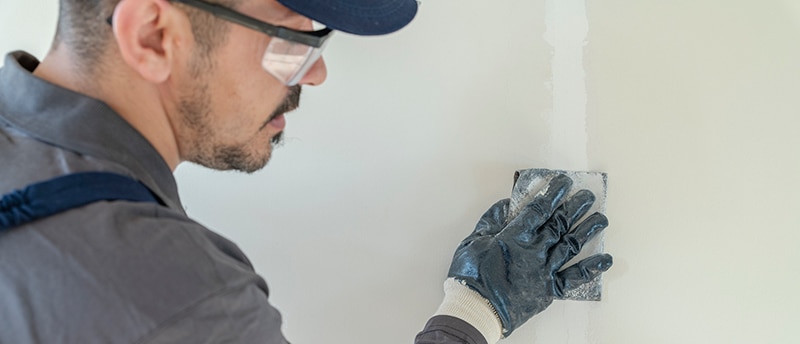
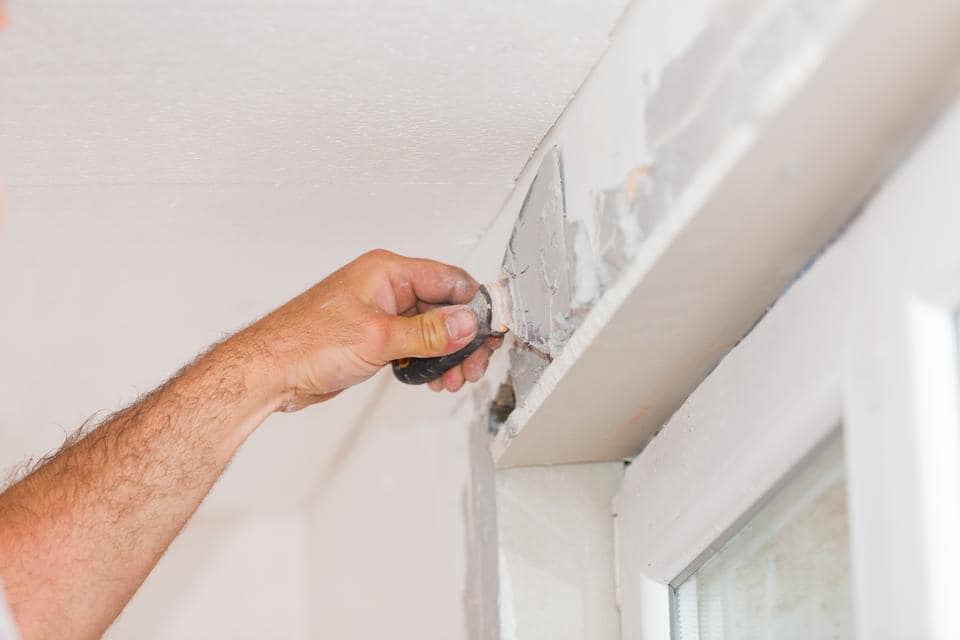
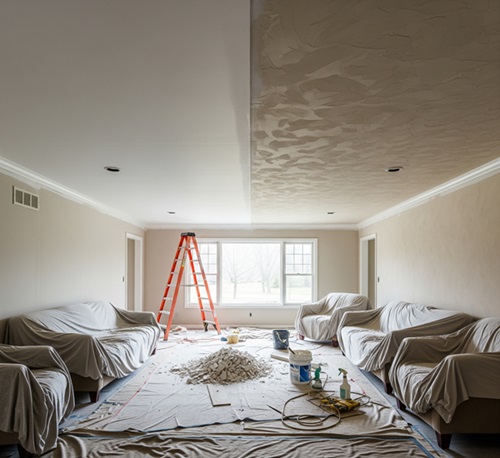
Cracks and damage around windows and doors are common drywall problems caused by movement and impact. Learn how to fix them durably with techniques that prevent return cracks.
Why Drywall Around Openings Keeps Cracking
If you have a crack running from the corner of a window or door, you've encountered one of drywall's most predictable failure points. Openings in walls create stress concentrations — the corners want to flex independently of the surrounding wall as the house settles, temperature changes, and humidity shifts. Even perfectly installed drywall will eventually crack at these corners unless the installation specifically addressed the stress with proper materials and reinforcement. Door and window damage isn't limited to settlement cracks. Slamming doors crack the drywall at the strike plate, kids hanging on door handles damage the jamb-to-drywall transition, and bumped corners on hallway entries dent the outside corner bead. Window areas also see condensation issues that can cause paint failure and even drywall damage in cold climates. From drafty windows in century-old <a href="/locations/connecticut/hartford">Hartford</a> homes to high-traffic doorways in <a href="/locations/maryland/baltimore">Baltimore</a> row houses, our <a href="/services/drywall-repair">drywall repair team</a> sees window and door damage as a daily part of our work.
Diagnosing the Cause Before Patching
Patching a recurring crack without addressing the cause guarantees it will return within a year. Spend a few minutes diagnosing what's actually happening. **Common causes of drywall cracks at openings:** 1. **Truss uplift or seasonal settlement.** Cracks that open and close seasonally indicate ongoing movement. Need flexible repair techniques or molding to disguise the moving joint. 2. **Poor original installation.** If drywall seams were placed at the corner of an opening (instead of running past the corner), cracks are inevitable. Standard practice is to use a single piece of drywall that extends 6+ inches past the opening corner. 3. **Foundation settlement.** Diagonal cracks at door and window corners can indicate foundation movement. Investigate further before just patching. 4. **Frame damage.** Out-of-square window or door frames stress the surrounding drywall. May need door or window service before drywall repair. 5. **Water damage.** Failed flashing or caulking around windows allows water into the wall, damaging drywall from behind. **Inspection checklist:** - Does the crack open and close with seasons? (Movement issue) - Is the door or window operating smoothly? (Frame issue if not) - Are there other settlement signs (uneven floors, sticking doors elsewhere)? (Foundation issue) - Is there any moisture, staining, or rotted wood near the crack? (Water issue) - Was the crack present before recent renovation work? (Possible workmanship issue) Address the underlying cause first, then repair the drywall.
Repairing Corner Cracks at Door and Window Openings
For cracks that are caused by normal movement and the underlying frame is sound, flexible repair techniques produce lasting results. **Standard corner crack repair:** 1. **Score the existing crack** with a utility knife to remove loose compound and create a slight V-groove. 2. **Vacuum or blow out dust** from the groove. 3. **Apply paper drywall tape** (not mesh — paper resists future cracking better at stress points) bedded in joint compound. 4. **Smooth out air bubbles** with the knife from the center of the tape outward. 5. **Apply three coats of joint compound**, each feathering 4 inches wider than the last. Final coat should feather 12+ inches in all directions. 6. **Sand thoroughly** with progressively finer grits. 7. **Prime and paint.** **For severe or recurring cracks:** 1. **Cut out a strip of drywall** along the cracked area, replacing it with a fresh patch that extends well past the opening corner. 2. **Tape and finish** the new patch. 3. **For corners that won't stop cracking**, install rigid corner bead at the inside corner above the door or window, which provides crack-resistance at the high-stress junction. The key insight: stress wants to concentrate at the opening corner. The repair must spread that stress across a wider area through proper taping and feathering, or the crack will return.
Replacing Damaged Corner Bead at Doorways
The outside corners of doorways take constant abuse. Furniture being moved through, kids running with toys, and even just normal household traffic eventually damage corner bead. **Process for replacing damaged metal corner bead:** 1. **Score along both sides of the damaged bead** with a utility knife to release the joint compound. 2. **Cut through the bead** at the top and bottom of the damaged section with a hacksaw blade or oscillating multi-tool. 3. **Pry the damaged section off** with a stiff putty knife or small pry bar. Work carefully to avoid tearing surrounding drywall. 4. **Clean the corner** of old compound and loose material. 5. **Cut new corner bead** to length (1/4 inch shorter than the opening to allow for fitting). 6. **Test fit** the new bead — both flanges should sit flat against the drywall with no gaps. 7. **Attach with screws** (1-1/4 inch drywall screws every 6 inches on alternating flanges), or use paper-faced corner bead applied with joint compound. 8. **Apply three coats of compound** over the new bead, feathering wider with each coat. 9. **Sand, prime, and paint.** **Material choice tips:** - **Metal corner bead** is traditional, strong, and inexpensive but can dent. - **Vinyl corner bead** is more dent-resistant and easier to cut. - **Paper-faced corner bead** (No-Coat, Strait-Flex) is the most damage-resistant and produces the smoothest finish — preferred for high-end work. For homes with kids or heavy traffic in <a href="/locations/california/fresno">Fresno</a> and <a href="/locations/nevada/reno">Reno</a>, we recommend paper-faced or vinyl bead over metal for any doorways needing replacement.
Fixing Drywall Damage From Door Slamming
Slammed doors cause a specific type of damage: the door handle or knob punches through the drywall on the opposite side, creating a hole roughly the size and shape of the knob. This is so common that there's a name for it — "doorknob damage." **Repair process:** 1. **Trim loose paper and gypsum** from the hole edges. 2. **For holes under 3 inches** (most doorknob damage): - Cut a square of drywall slightly larger than the hole. - Score and snap the back to remove gypsum, leaving a paper border (California patch). - Butter the back of the paper border with compound. - Press into the hole and smooth flush. - Apply two more coats of compound, feathering wider each time. 3. **For holes over 3 inches**: - Square off the damaged area. - Install wood backing strips behind the drywall. - Screw in a square drywall patch. - Tape all four seams and finish. 4. **Sand smooth, prime, and paint.** **Preventing future damage:** Install a doorstop. A simple $5 doorstop screwed into the baseboard prevents 100% of doorknob damage. Wall-mounted doorstops, hinge-pin doorstops, and floor-mounted doorstops are all effective. Some homeowners install clear plastic discs ("door bumpers") directly on the drywall as a visual reminder and second line of defense.
Special Considerations for Window Repairs
Window-area drywall damage often involves moisture, condensation, or seal failures in addition to mechanical damage. **Common window-area issues:** 1. **Condensation staining.** Cold weather condensation on window glass runs down onto the wall below, eventually staining and damaging drywall. Fix the cause (single-pane glass, lack of weatherstripping, indoor humidity) and replace damaged drywall. 2. **Seal failure around the window frame.** Water entering through failed exterior caulking damages drywall at the window's interior trim. Repair exterior seal first, then dry out the wall before drywall repair. 3. **Trim removal damage.** Removing window casing for painting or window replacement often tears drywall paper along the edge of the trim line. 4. **Crack at the upper corner.** Same as door corners — settlement and structural movement create predictable cracks above windows. **Repair priorities:** 1. **Stop active water intrusion.** No interior repair survives ongoing water damage. 2. **Dry the wall cavity completely.** Use a moisture meter to verify. 3. **Replace damaged drywall** rather than patching wet, weakened material. 4. **Use moisture-resistant drywall** in any area prone to condensation. 5. **Reinstall trim with proper sealing** to prevent moisture entry at the trim-to-drywall junction. For any window-area repair where moisture is involved, addressing the underlying water issue is more important than the drywall work itself. Our <a href="/services/water-damage-repair">water damage drywall specialists</a> handle the full scope of window-related repairs. Call (818) 918-2397 for a free assessment.
Need Professional Drywall Help?
Contact Fast Fix Drywall Repair for a free estimate on your next project.
Get a Free QuoteLooking for drywall repair services in your area? Browse our full service directory by city.