Home additions create unique drywall challenges where new construction meets existing walls. Achieving a seamless transition requires specific techniques and attention to detail.
The Challenge of Blending New and Existing Drywall
Home additions are exciting projects that add living space and value, but they create a specific drywall challenge: connecting new construction to an existing home in a way that looks seamless and performs well over time. The junction between new and old presents several difficulties. The new framing will settle and shift independently of the original structure. Drywall thickness, texture, and finish level may differ between the old and new sections. Temperature and humidity conditions during construction affect how the new drywall cures and moves. Without careful attention to these transition points, visible cracks, texture mismatches, and finish line differences will develop at the junction and announce to anyone looking at it that this part of the home was added later. Homeowners in [Boise](/locations/idaho/boise) and [Meridian](/locations/idaho/meridian) investing in home additions want results that look like the new space was always part of the original home.
Preparing the Existing Wall for New Construction
The connection between old and new starts before the first new panel is hung. Where the addition meets the existing home, a section of the old drywall typically needs to be removed to allow proper framing connections and to create a clean edge for the new drywall to butt against. This removal should extend to the nearest stud on the existing wall, creating a solid fastening point shared by both old and new panels. If the existing wall has texture, the texture in the transition zone will need to be scraped smooth to allow tape and compound to bond properly. Any existing insulation, vapor barrier, or wiring in the transition area needs to be properly handled as part of the framing connection.
Managing Differential Settlement at the Junction
New construction settles as framing lumber dries and the foundation cures, while the existing home has already completed most of its settling. This differential movement concentrates at the junction between old and new, producing cracks in the drywall at that seam. Several techniques minimize this problem. Using flexible expansion control joints at the transition point allows the two structures to move independently without cracking the surface. Applying fiberglass mesh tape rather than paper tape at the junction provides greater flexibility. Some builders install a slip joint — where the new drywall overlaps the old by an inch or two without being rigidly taped — allowing movement while concealing the gap behind a seamless compound finish. Our [drywall installation](/services/drywall-installation) team in [Nampa](/locations/idaho/nampa) and [Idaho Falls](/locations/idaho/idaho-falls) plans for differential settlement on every addition project to prevent future cracking.
Matching Existing Texture and Finish
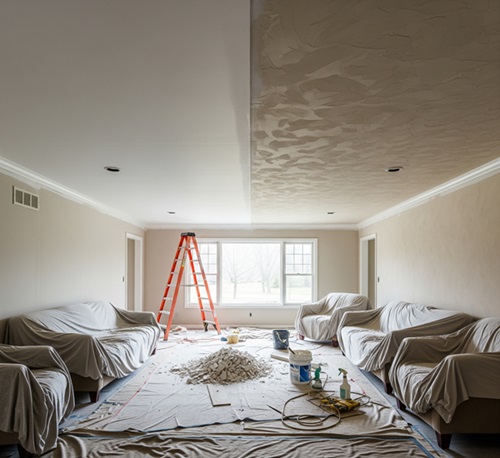
One of the most noticeable signs of an addition is mismatched wall texture between the old and new spaces. Achieving a perfect match requires identifying the exact texture type on the existing walls and replicating it on the new surfaces. This sounds simpler than it is — even the same texture type can vary in density, pattern size, and application technique. The best approach is to have the same contractor texture both the new walls and a section of the existing walls in the transition zone, blending the two patterns together. If the existing texture is a type that is no longer commonly used, a skilled finisher can replicate it by adjusting their spray pattern, compound consistency, and application technique. Our [drywall finishing and texturing](/services/drywall-finishing-texturing) specialists have extensive experience matching existing textures for seamless addition transitions.
Ceiling Transitions Between Old and New
Ceiling transitions are often more challenging than wall transitions because any misalignment between old and new ceiling heights is immediately visible. Even a sixteenth-inch difference in ceiling height at the junction creates a shadow line that the eye catches instantly. The new ceiling joists or trusses must be set to exactly match the existing ceiling height, accounting for the thickness of the new drywall. In practice, slight variations are almost inevitable, and the drywall finishing at the transition must compensate for them through careful feathering of joint compound. Homeowners in [Twin Falls](/locations/idaho/twin-falls) and [Pocatello](/locations/idaho/pocatello) should discuss ceiling-height matching with their contractor early in the planning phase, as adjustments are far easier to make during framing than after drywall is hung.
Ensuring Code Compliance in the Addition
Home additions must meet current building codes, which may differ from the codes under which the original home was built. This can create situations where the new section requires different drywall specifications than the existing home — for example, fire-rated Type X drywall may be required in the addition for walls adjacent to garages or property lines, even if the original home used standard drywall in similar locations. Energy codes may require different insulation levels that affect wall cavity depth and drywall installation details. Smoke detector placement, outlet spacing, and other code requirements will be reflected in the drywall layout and cutouts. Working with a contractor who understands current code requirements ensures that the addition passes inspection and does not create compliance issues that surface during a future home sale.
Need Professional Drywall Help?
Contact Fast Fix Drywall Repair for a free estimate on your next project.
Get a Free QuoteLooking for drywall repair services in your area? Browse our full service directory by city.