Well-intentioned drywall repairs often go wrong. Avoiding these common mistakes saves you from making the damage worse and spending more on corrective work.
Skipping the Source Fix
The most consequential mistake in drywall repair is fixing the visible damage without addressing the underlying cause. Patching a water stain without finding and repairing the leak guarantees the stain will return — along with mold, softening, and potentially structural damage that was not present the first time. Re-taping a crack caused by foundation movement without stabilizing the foundation means the crack will reopen within months. Painting over mold-stained drywall without removing the mold creates a hidden health hazard behind a fresh coat of paint. Homeowners in [Las Vegas](/locations/nevada/las-vegas) and [Henderson](/locations/nevada/henderson) should always ask why the damage occurred before asking how to fix it — solving the cause first makes the repair lasting rather than temporary.
Applying Compound Too Thick
Inexperienced repairers commonly try to fill a defect with a single thick application of joint compound, hoping to save time by eliminating multiple coats. This approach fails for several reasons. Thick compound applications shrink dramatically as they dry, producing concave surfaces and cracks. They take much longer to dry — sometimes days rather than hours — and the outer surface may skin over while the interior remains wet, trapping moisture and creating a weak, crumbly repair. Thick applications also do not adhere as well to the underlying surface, increasing the risk of delamination. Professional drywall finishing relies on multiple thin coats — each applied after the previous one has dried completely — to build up the surface gradually with full adhesion and minimal shrinkage.
Using the Wrong Type of Compound
Joint compound comes in several formulations, each designed for specific applications. Using the wrong type produces subpar results. Pre-mixed all-purpose compound is convenient but weaker than setting-type compound for embedding tape and filling deep repairs. Lightweight compound sands easily but is too soft for high-traffic areas. Setting-type compound provides excellent strength and adhesion but is difficult to sand once cured, making it unsuitable for final coats where smooth finishing is needed. Topping compound is formulated specifically for final coats and sands beautifully but lacks the strength for tape embedding. Our [drywall repair](/services/drywall-repair) team in [Reno](/locations/nevada/reno) and [North Las Vegas](/locations/nevada/north-las-vegas) uses the appropriate compound type at each stage of the repair process — setting-type for strength underneath, lightweight or topping compound for the finishing coats.
Inadequate Sanding Between Coats
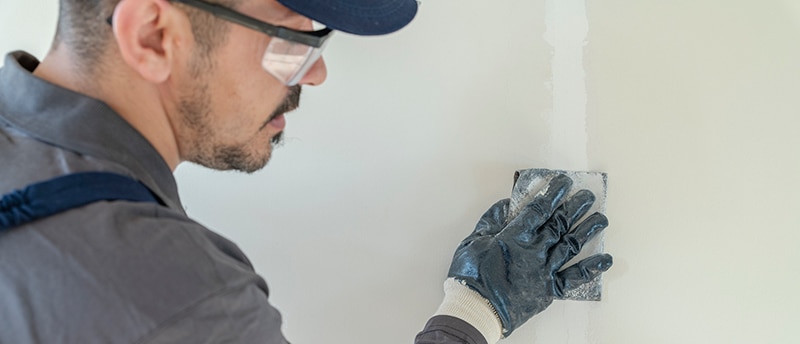
Sanding between compound coats is not optional — it is essential for a smooth, invisible repair. Each coat of compound, no matter how carefully applied, leaves ridges, tool marks, and slight high spots that must be leveled before the next coat can produce a smooth result. Skipping the sanding step means each subsequent coat amplifies rather than corrects the imperfections beneath it. The result is a bumpy, uneven surface that is glaringly obvious once painted. Equally problematic is over-sanding, which can gouge the compound surface, sand through the tape, or damage the surrounding drywall paper facing. Light, even sanding with the appropriate grit — 120 to 150 for intermediate coats, 150 to 220 for final sanding — produces the smooth surface that paint requires.
Not Feathering Compound Wide Enough
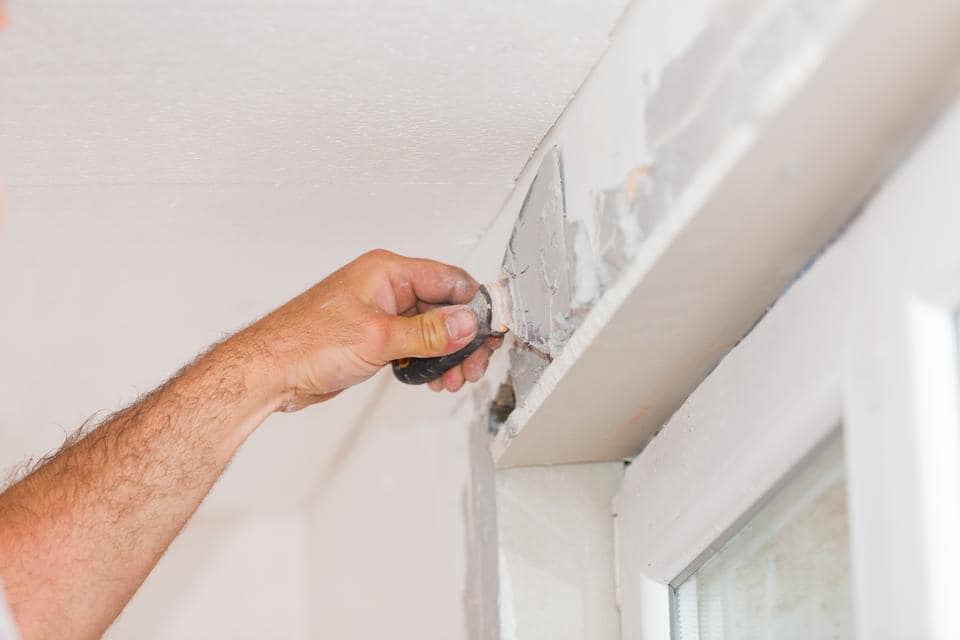
One of the most visible signs of an amateur drywall repair is a patch with sharp, defined edges — where you can see exactly where the compound stops and the original surface begins. This happens when the compound is not feathered wide enough beyond the repair area. Professional finishing feathers compound six to twelve inches beyond the edge of the repair in a gradual, invisible transition. This wide feathering makes the thickness change so gradual that the eye cannot detect the transition, even under paint. Narrow feathering, by contrast, creates a visible ridge that shows through paint as a shadow line. Homeowners in [Sparks](/locations/nevada/sparks) attempting DIY repairs should invest in wider finishing knives — 10 to 14 inches — which naturally produce the wide feathering that creates invisible repairs.
Painting Before the Repair Is Ready
Impatience is the enemy of a good drywall repair. Painting over compound that has not fully dried locks moisture inside the repair, which can cause the paint to bubble, the compound to remain soft, and the adhesion between layers to fail. Painting over unsanded compound makes every imperfection permanent. Painting over unprimed repairs produces visible differences in paint sheen and color absorption between the patched and original areas — a defect called flashing that is especially noticeable with flat and matte paints. The correct sequence is clear: let each compound coat dry completely, sand smooth, apply one more coat if needed, let it dry, sand final, prime with a quality drywall primer, let it dry, and then paint. Following this sequence produces a repair that is truly invisible — worth the patience it requires.
Need Professional Drywall Help?
Contact Fast Fix Drywall Repair for a free estimate on your next project.
Get a Free QuoteLooking for drywall repair services in your area? Browse our full service directory by city.