Pets can do serious damage to drywall through scratching, chewing, and accidents. This guide covers everything from minor scratches to major holes and odor sealing.
How Pets Damage Drywall (And Why It Adds Up Fast)
Pet owners know the toll dogs and cats take on a home, and drywall is one of the most common casualties. Dogs scratch at doors when left alone, chew baseboards and corners during teething or anxiety, and dig at walls when they hear something inside. Cats use vertical wall surfaces as scratching posts, especially corners with exposed drywall edges. Both species can cause urine damage that soaks into the drywall and creates lasting stains and odors. The damage tends to start small but accumulate. A few scratches around a door become a baseball-sized hole over six months. A small chewed corner becomes a torn-out section after a few more anxious episodes. By the time pet owners call for repair, the damage often spans multiple rooms. From apartment-dwelling cats in <a href="/locations/new-york/brooklyn">Brooklyn</a> to high-energy dogs in <a href="/locations/colorado/colorado-springs">Colorado Springs</a> homes, our <a href="/services/drywall-repair">drywall repair team</a> sees pet damage as a steady part of our work. The good news is that nearly all of it is fixable.
Identifying and Sorting Pet Damage Types
Before repairing, sort the damage by type because each kind has different requirements. **Surface scratches.** Cat claws or dog nails scraping the paint and top layer of drywall paper. Usually fixable with spackle and paint. **Deep scratches and gouges.** Dog claws repeatedly working the same area, often around doorways. Requires filling, taping if extensive, and refinishing. **Chewed corners and edges.** Puppies and teething dogs chew on outside corners and baseboard areas, removing both paper and gypsum core. Often requires corner bead replacement and substantial patching. **Dug-out holes.** Anxious dogs and cats digging at walls when they sense prey or hear sounds inside. Can reach all the way through to wall cavity. Requires full patching with backing or California patch. **Urine staining and odor.** Cat or dog urine that has soaked into drywall. Requires removal of affected drywall in many cases, as the stain and odor cannot be sealed reliably through paint. **Vomit or accident staining.** Surface stains that often can be cleaned and sealed if caught early, but may require replacement if soaked in. The most overlooked category is urine damage. Many homeowners try to paint over urine stains and end up with both visible bleed-through and persistent odor.
Repairing Surface Scratches and Light Damage
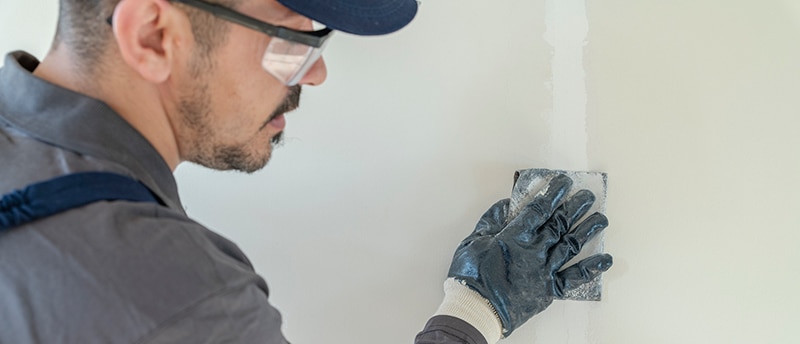
For scratches that haven't gone through the paper face, the repair is straightforward. **Process:** 1. **Wipe the damaged area** with a damp cloth to remove dust and loose paint. 2. **Lightly sand** with 220-grit sandpaper to smooth raised paint or paper edges. 3. **Apply lightweight spackle** with a 1.5 inch putty knife, pressing it into the scratches. 4. **Knife flush** in two directions to ensure full filling. 5. **Let dry per product directions**, then sand smooth with 220-grit. 6. **Spot prime** the repaired area before painting. 7. **Paint with matching color and sheen.** For best blending, paint from corner to corner rather than spot painting. **Pro tip for ongoing pet households:** Save touch-up paint in a clearly labeled container with the room name and paint formula. Pet damage tends to be a recurring battle and having matching paint on hand turns a 30-minute fix into a 5-minute fix. Many pet owners in <a href="/locations/florida/orlando">Orlando</a> and <a href="/locations/california/sacramento">Sacramento</a> set up a "pet damage repair kit" with spackle, sanding sponges, primer, and touch-up paint for quick periodic fixes.
Fixing Chewed Corners and Edge Damage
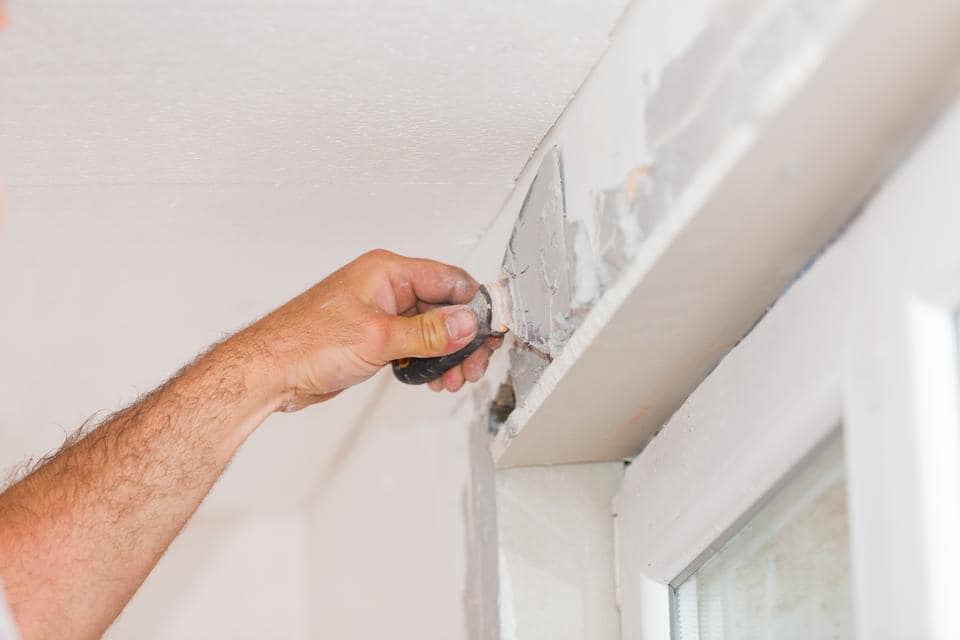
Outside corners are favorites for puppies and teething dogs because the edge gives them something to grip. The corner bead — the metal or vinyl strip that protects the outside corner — often gets damaged along with the drywall. **Process for corner damage:** 1. **Assess the corner bead.** Press on it to feel for damage. If it's bent, dented, or pulled away from the wall, it needs replacement. 2. **Remove damaged corner bead.** Cut through the existing bead with a hacksaw blade and pry off carefully. Don't try to bend it back into shape — kinked bead is permanently weakened. 3. **Clean and prep the corner.** Remove loose drywall and old compound from the corner area. 4. **Install new corner bead.** Cut to length, attach with screws or compound-on adhesive paper bead. Vinyl bead is more dent-resistant than metal for pet households. 5. **Apply three coats of compound** over the new bead, feathering wider with each coat. 6. **Sand smooth** and prime before painting. **Preventing future chewing:** - Apply bitter apple spray to corners and edges in chew-prone areas. - Consider installing protective corner guards (clear vinyl or wood) over outside corners in puppy zones. - Address underlying anxiety issues with training or veterinary consultation. Damage prevention is usually cheaper than damage repair, especially during the puppy phase.
Patching Dug-Out Holes from Scratching and Digging
When pets dig at walls to get at sounds (mice, plumbing, insects), they can create holes that go all the way through the drywall. These need full patching like any other large hole. **For holes under 4 inches:** Use a California patch — cut a drywall patch with a 1 inch paper border, butter the back of the border with compound, and press the patch into the wall. **For holes 4 to 8 inches:** Install wood backing strips behind the drywall (1x3 furring slid into the wall cavity and screwed in place), then screw in a new drywall patch. **For holes over 8 inches:** Cut back to the nearest studs, install drywall from stud to stud, tape and finish all seams. **Always address the underlying issue first.** If a dog dug through the wall because she heard mice in the cavity, repairing the wall without addressing the pest problem just sets up a repeat. Investigate the cavity before closing it up. Customers in <a href="/locations/georgia/savannah">Savannah</a> and <a href="/locations/south-carolina/charleston">Charleston</a> sometimes find rodent issues that contributed to the pet behavior. **For ongoing scratching behavior**, consider installing a chair rail or wainscoting in the affected room. Vertical wood paneling at scratch height gives the pet a more durable surface and protects the drywall.
Dealing With Urine Damage and Odor
Pet urine is the most challenging drywall damage because the staining and odor can persist long after the visible mark fades. The acidic nature of urine breaks down both the paper face and the gypsum core, and the odor molecules can resist even strong cleaners. **Assessment:** - **Surface staining only.** The urine touched the wall but didn't soak in. Clean, seal, and repaint. - **Saturated drywall.** The urine has penetrated into the gypsum core. Affected drywall must be cut out and replaced. - **Persistent odor.** Even after cleaning, odor remains. The underlying material is contaminated and requires removal. **Cleaning and sealing for surface stains:** 1. **Clean the area** with an enzyme-based pet stain remover (Nature's Miracle, Anti-Icky-Poo, or similar). These break down urine compounds rather than just masking them. 2. **Let the surface dry completely.** 3. **Apply shellac-based primer** (Zinsser BIN) — the gold standard for sealing in pet odor and stains. Two coats are often needed. 4. **Paint with finish coat.** **Replacement for saturated drywall:** 1. **Cut out affected drywall** generously — at least 6 inches beyond visible staining in all directions. 2. **Inspect framing and insulation** for contamination. Replace any insulation that absorbed urine. 3. **Clean framing** with enzyme cleaner, then seal with shellac primer before closing the wall. 4. **Install new drywall**, tape, finish, and paint. Our <a href="/services/drywall-repair">drywall repair specialists</a> handle pet damage of all types with attention to both the visible repair and the underlying contamination. Call (818) 918-2397 for a free assessment.
Need Professional Drywall Help?
Contact Fast Fix Drywall Repair for a free estimate on your next project.
Get a Free QuoteLooking for drywall repair services in your area? Browse our full service directory by city.