Workshop walls and home gym surfaces face repeated impacts, weight, and abrasion. Here's how to repair existing damage and reinforce drywall for ongoing heavy use.
Why Workshop and Gym Walls Take a Beating
A garage workshop or home gym puts more wear on drywall in a year than a typical living room sees in a decade. Tools dropped, weight plates bumped, pegboards loaded, barbells racked, and impact from sports equipment all leave marks. Add the temperature swings and humidity of an unconditioned garage, and standard drywall struggles to keep up. Common damage patterns include: - **Dings and dents** from tools, projectiles, and dropped weights - **Holes punched through drywall** from impact at body height - **Stress cracks** around heavily loaded tool storage hangers - **Abrasion damage** behind equipment that contacts the wall - **Anchor holes** from rearranged storage systems and equipment In workshop-loving regions like <a href="/locations/texas/dallas">Dallas</a>, <a href="/locations/michigan/detroit">Detroit</a>, and <a href="/locations/ohio/columbus">Columbus</a>, garage drywall repair is a near-constant need for serious DIYers and home gym owners.
Repairing Impact Damage and Holes
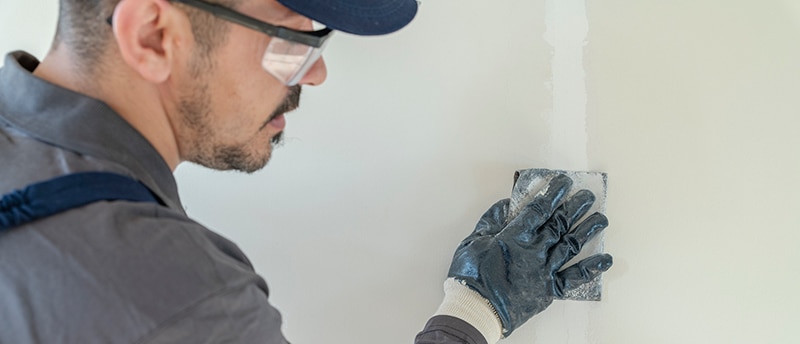
Impact damage in a workshop or gym usually means either a dent (drywall paper intact, gypsum compressed) or a hole (drywall paper broken through). Each is handled differently. **For dents (paper intact):** 1. **Lightly sand the area** to remove any loose paint. 2. **Apply lightweight spackle** to fill the depression. Press firmly. 3. **Let dry, then apply a second coat** if needed. 4. **Sand flush, prime, and paint.** **For holes up to 6 inches:** 1. **Use a self-adhesive mesh drywall patch** larger than the hole. 2. **Apply two coats of joint compound** over the patch, feathering each progressively wider. 3. **Sand, prime, and paint.** **For larger holes:** The California patch method works well for holes up to about 8 inches: 1. Cut a square of new drywall about 2 inches larger than the hole on each side. 2. Score the back of the patch 1 inch in from each edge, then snap off the gypsum, leaving the front paper intact as a flange. 3. Apply joint compound around the hole edges, then press the patch in place so the paper flanges adhere to the surrounding wall. 4. Cover with two or three coats of joint compound, feathering wide. 5. Sand, prime, and paint. Workshop walls take repeated abuse, so consider reinforcing high-impact areas during repair (covered later in this guide).
Fixing Damage Around Heavy Tool Storage
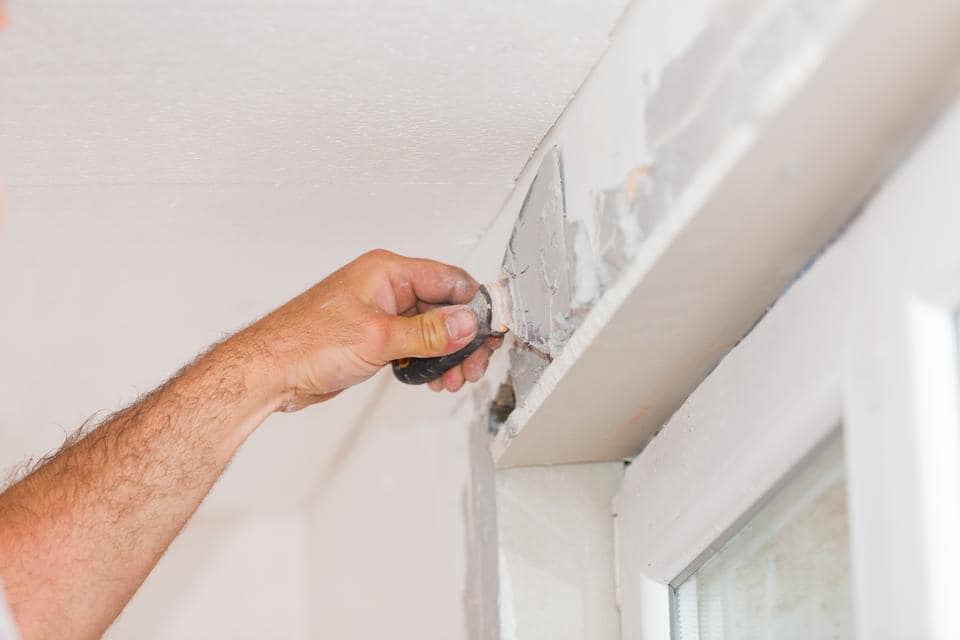
Pegboards, tool racks, and heavy storage systems put concentrated load on small areas of drywall. When mounting hardware loosens or fails, the resulting damage often includes torn drywall paper, enlarged anchor holes, and stress cracks radiating from the mounting points. **Repair process for failed mounting locations:** 1. **Remove all anchors, screws, and toggle bolts** from the failed mounting area. 2. **Inspect for paper tearing.** Lightly sand any frayed paper edges. 3. **Fill anchor holes with setting-type compound** (Easy Sand 45 or 90), pressed deep into each hole. 4. **Apply a second coat** to compensate for shrinkage. 5. **Sand flush.** 6. **Plan the reinstallation carefully** — see the reinforcement section below. For stress cracks radiating from the mounting point, score the cracks, apply paper tape bedded in compound, and finish with three coats. Don't skip the tape — these cracks will reopen under load if not reinforced. For permanent heavy storage, the right answer is almost always to mount into studs, not into drywall. Where stud locations don't work, use 1/2 inch plywood reinforcement (covered below) rather than relying on drywall anchors for serious loads.
Reinforcing Drywall for Heavy-Duty Use
Standard 1/2 inch drywall is not designed for the abuse of an active workshop or home gym. Before patching damage in a high-use area, consider whether the repair should include reinforcement. **Option 1: Upgrade to abuse-resistant drywall.** Specialty boards like USG Sheetrock Brand Mold Tough AR or CertainTeed Abuse-Resistant Type AR are designed for high-impact environments. They cost about 50% more than standard drywall and offer significantly better resistance to dents and punctures. For a wall that's getting frequent damage, replacing the entire panel with abuse-resistant board pays off quickly. **Option 2: Install plywood backing.** For walls where heavy storage will be mounted, install 1/2 inch or 3/4 inch plywood between the studs and drywall during repair. This creates a continuous fastening surface that holds anchors much better than drywall alone and resists impact damage. **Option 3: Add a sacrificial layer.** Mount 1/4 inch lauan, MDF, or even pegboard over the drywall in high-impact zones. The sacrificial layer takes the abuse and can be replaced periodically without disturbing the underlying drywall. **Option 4: Use rubber wall protection.** For home gyms specifically, rubber wall guards installed at impact height (typically 0 to 6 feet) protect drywall from weight plates, kettlebells, and dropped equipment. Reinforcement adds material cost but eliminates the cycle of repair-damage-repair that plagues unprotected workshop walls.
Environmental Considerations: Humidity, Temperature, Dust
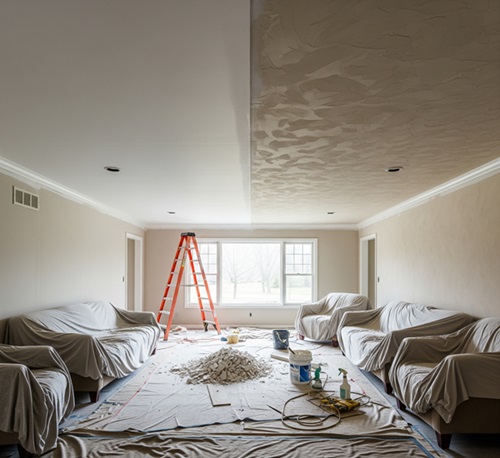
Garage workshops and home gyms often have less environmental control than the rest of the house. Temperature swings, humidity variation, and constant dust all affect drywall repair quality. **Humidity:** Unconditioned garages experience much wider humidity ranges than living spaces. This causes joint compound to dry inconsistently and creates ongoing seam movement. **Mitigations:** - Use setting-type compound, which cures by chemical reaction rather than air drying — performs better in variable humidity. - Apply repairs during stable weather periods, not during humidity extremes. - Consider installing a dehumidifier or HVAC supply in heavily used garages. **Temperature:** Cold garages (under 50°F) slow joint compound dry time dramatically and can even cause failures. Hot garages (over 90°F) accelerate dry time and may cause cracking from overly fast surface drying. **Mitigations:** - Schedule repair work for moderate weather seasons. - Use a portable heater or fan to moderate conditions during repair. - Choose setting-type compounds with appropriate set times for the conditions. **Dust:** Workshops generate dust constantly, and finished paint surfaces accumulate it. Plan for protection during and after repair — cover stored items, clean the surface before painting, and consider painting the wall in semi-gloss or eggshell rather than flat for easier dust removal. For workshop walls in <a href="/locations/arizona/phoenix">Phoenix</a> heat or <a href="/locations/minnesota/minneapolis">Minneapolis</a> cold, environmental factors significantly affect repair durability.
When to Hire Professional Repair Help
DIY repair makes sense for occasional damage in a workshop or gym. But for chronic damage, full wall reinforcement, or repair of multiple impact zones, professional help often delivers better long-term value. **Hire a pro when:** - The wall has more than a few damage spots — single-visit repair of multiple areas is faster and cheaper. - You want to upgrade to abuse-resistant drywall or add plywood backing. - The damage extends into framing or other structural elements. - The space is being converted from garage to finished living area, where finish quality standards are higher. - You're preparing to sell the home and want clean, invisible repairs in inspection-visible areas. Our <a href="/services/drywall-repair">drywall repair team</a> handles workshops, home gyms, and garage conversions across the country, including reinforcement options that prevent the damage from happening again. Contact us at (818) 918-2397 for a free estimate.
Need Professional Drywall Help?
Contact Fast Fix Drywall Repair for a free estimate on your next project.
Get a Free QuoteLooking for drywall repair services in your area? Browse our full service directory by city.