Drywall work produces fine dust that is hazardous to breathe. Proper safety equipment and dust management protect your health during repair and finishing projects.
Understanding Drywall Dust Hazards
Drywall sanding produces enormous quantities of fine gypsum dust that become airborne and remain suspended for hours. This dust — composed primarily of calcium sulfate dihydrate particles — is classified as a nuisance dust by OSHA, but prolonged exposure can cause significant respiratory irritation, chronic coughing, and aggravation of pre-existing conditions like asthma and bronchitis. Joint compound dust also contains silica in small amounts, which poses more serious long-term health risks with chronic exposure. The particles are fine enough to penetrate deep into the lungs and small enough to pass through gaps in poorly fitted dust masks. Homeowners in [Hartford](/locations/connecticut/hartford) and [New Haven](/locations/connecticut/new-haven) undertaking DIY drywall work should take dust protection as seriously as any other safety precaution.
Essential Personal Protective Equipment
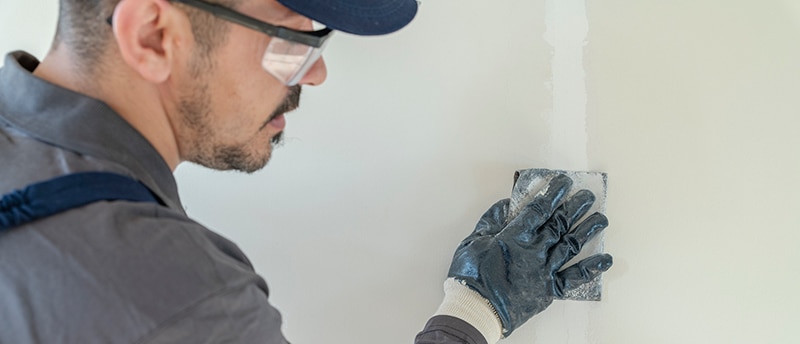
The minimum PPE for any drywall sanding work includes an N95 or P100 respirator — not a simple paper dust mask, which does not provide adequate filtration for fine gypsum particles. Safety glasses or goggles protect eyes from airborne dust that causes irritation and corneal scratching. Hearing protection is advisable when using power sanders. Work gloves protect hands from compound chemicals and the abrasive effects of sanding. For extended sanding sessions or work in enclosed spaces, a half-face respirator with P100 cartridges provides superior protection and a better seal than disposable N95 masks. Our [drywall finishing and texturing](/services/drywall-finishing-texturing) professionals use appropriate PPE on every project and follow OSHA guidelines for dust exposure limits.
Dust Containment Strategies
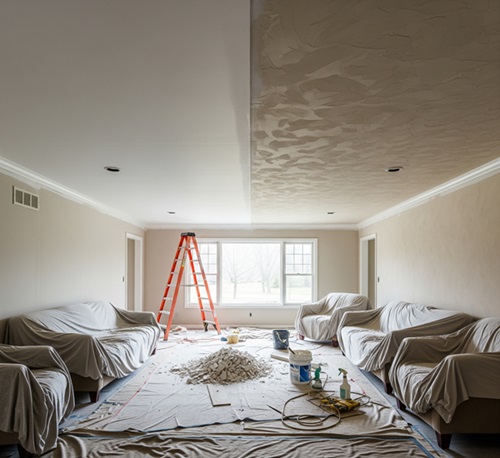
Containing dust within the work area prevents it from spreading throughout the home, where it settles on furniture, electronics, bedding, and food preparation surfaces. Seal doorways with plastic sheeting and painter's tape, creating an airtight barrier between the work area and occupied spaces. Cover HVAC registers in the work area to prevent dust from entering the duct system, where it would be distributed to every room in the house. Use a box fan with a furnace filter in a window to create negative pressure in the work area — this draws air from the rest of the house into the work area and exhausts dusty air outside, preventing dust migration. These measures take minutes to set up but save hours of cleanup and protect your family's health.
Dust-Reduced Sanding Methods
Several techniques significantly reduce the amount of airborne dust produced during drywall sanding. Vacuum sanders — also called dustless sanders — connect to a shop vacuum through a hose, capturing most dust at the source as it is generated. Wet sanding with a damp sponge eliminates airborne dust almost entirely, though it requires more skill to achieve a smooth finish and cannot be used with all compound types. Sanding screens rather than sandpaper produce less dust because they allow particles to pass through the mesh rather than accumulating on the surface. Homeowners in [Stamford](/locations/connecticut/stamford) and [Bridgeport](/locations/connecticut/bridgeport) who are sensitive to dust or who cannot vacate the home during sanding should specifically request dust-reduced methods from their contractor.
Safe Cleanup After Drywall Work
Proper cleanup after drywall work is essential for removing settled dust from all surfaces. Use a HEPA-filtered vacuum rather than a standard household vacuum, which blows fine particles through its exhaust and back into the air. Damp-mop hard floors rather than sweeping, which re-suspends dust. Wipe all horizontal surfaces — shelves, windowsills, countertops, light fixtures — with damp cloths. Change your HVAC filter after drywall work, as the existing filter will have captured a significant dust load. If dust has entered the duct system despite containment efforts, consider professional duct cleaning. Run HEPA air purifiers in affected rooms for several days after the project to capture remaining airborne particles.
Special Considerations for Occupied Homes
When drywall work is performed in an occupied home, additional precautions protect family members who are not involved in the work. Ideally, family members — especially children, elderly individuals, and anyone with respiratory conditions — should leave the home during sanding and not return until cleanup is complete. If vacating is not possible, strict containment between the work area and occupied spaces is essential. Seal all gaps in containment barriers, maintain negative pressure in the work area, and verify that no dust is migrating beyond the barriers. Our contractors in [Norwalk](/locations/connecticut/norwalk) provide comprehensive dust containment as a standard practice for all work in occupied homes, understanding that protecting your family's health is as important as the quality of the finished wall.
Need Professional Drywall Help?
Contact Fast Fix Drywall Repair for a free estimate on your next project.
Get a Free QuoteLooking for drywall repair services in your area? Browse our full service directory by city.