From small nail holes to fist-sized damage, this guide walks you through every method for patching drywall — including when a professional wall patch makes more sense than a DIY fix.
Why Drywall Holes Are More Common Than You Think
Holes in drywall are one of the most frequent issues homeowners face. Whether it's from a doorknob slamming into a wall, furniture being moved carelessly, or kids roughhousing indoors, drywall damage happens fast. The good news is that learning how to patch a hole in drywall is a skill that saves you money and keeps your home looking its best. Understanding the right drywall patch method depends entirely on the size and location of the damage. A tiny nail hole requires a completely different approach than a large opening left behind by a plumbing repair. In this guide, we'll cover every scenario so you know exactly how to patch a hole in the wall — or when it makes sense to call a <a href="/services/drywall-repair">professional drywall repair</a> team. If you're dealing with drywall damage in <a href="/locations/texas/houston">Houston</a>, <a href="/locations/florida/miami">Miami</a>, or anywhere else across the country, our licensed contractors are ready to help with expert wall patch solutions.
Assessing the Damage Before You Start Patching Drywall
Before grabbing a putty knife and joint compound, take a moment to assess what you're working with. The approach to patching drywall varies dramatically based on hole size: **Small holes (under 1 inch):** These include nail holes, screw holes, and minor dings. They're the easiest to fix and usually require nothing more than lightweight spackling compound and a putty knife. **Medium holes (1 to 6 inches):** These might come from doorknob impacts, accidental furniture damage, or small plumbing access cuts. A self-adhesive drywall patch kit works well here — these mesh patches provide backing support and are available at any hardware store. **Large holes (over 6 inches):** Caused by major impacts, water damage, or renovation work, these require a proper drywall patch with a new piece of gypsum board, furring strips or backing boards, and multi-coat finishing. This is where many homeowners in <a href="/locations/california/los-angeles">Los Angeles</a> and <a href="/locations/illinois/chicago">Chicago</a> choose to hire a professional drywall contractor for a seamless result.
Step-by-Step: How to Patch Small Nail Holes and Dings
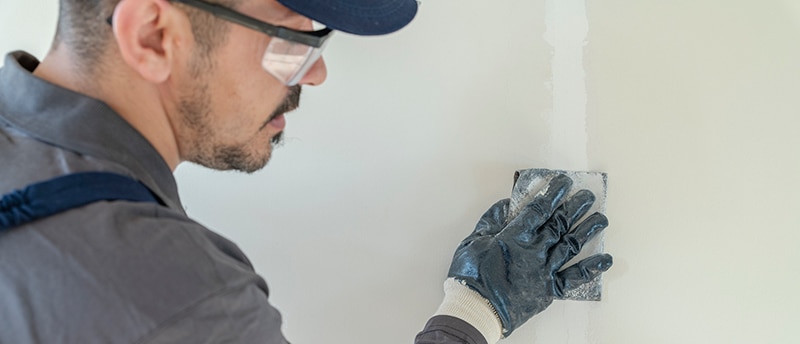
For small holes — the kind left behind by picture hangers, nails, or minor bumps — the process is straightforward: 1. **Clean the area.** Remove any loose debris, dust, or old fasteners from the hole. If there's a raised edge of drywall paper around the hole, lightly sand it flat. 2. **Apply spackling compound.** Using a putty knife (a 2-inch blade works best), press lightweight spackle into the hole. Overfill slightly — spackling compound shrinks as it dries. 3. **Let it dry completely.** Most lightweight spackle dries in 30 minutes to 2 hours depending on humidity and thickness. 4. **Sand smooth.** Once dry, lightly sand with 120-grit sandpaper until the patch is perfectly flush with the surrounding wall surface. 5. **Prime and paint.** Apply a coat of primer over the patch before painting. Without primer, the patched area will absorb paint differently and show through — a common mistake that makes drywall patches visible. This method works for the vast majority of small wall holes that homeowners encounter. The total cost is minimal — a tub of spackle and a putty knife will handle dozens of small repairs throughout your home.
How to Patch a Medium-Sized Hole with a Drywall Patch Kit
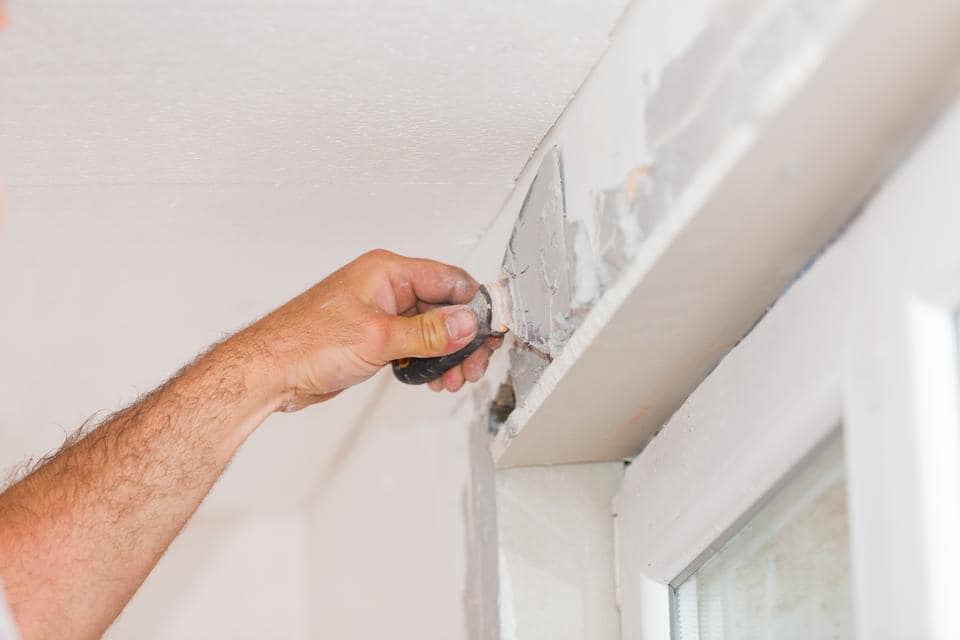
Medium holes between 1 and 6 inches are too large for spackle alone but don't require cutting new drywall. This is where a drywall patch kit becomes your best friend. **Materials needed:** - Self-adhesive mesh drywall patch (sized to cover the hole with at least 1 inch of overlap) - Joint compound (pre-mixed "all-purpose" works well) - 6-inch and 10-inch drywall knives - 120-grit sandpaper - Primer and paint **The process:** 1. **Clean and prep.** Remove any loose drywall fragments and lightly sand the area around the hole to create a smooth bonding surface. 2. **Apply the self-adhesive patch.** Center the mesh patch over the hole and press it firmly onto the wall. The aluminum backing provides structural support while the mesh edges blend into the surrounding surface. 3. **Apply the first coat of joint compound.** Using your 6-inch knife, spread a thin layer of joint compound over the entire patch, feathering the edges outward about 2 inches beyond the patch border. 4. **Let it dry and apply a second coat.** After the first coat is fully dry (typically overnight), apply a second, slightly wider coat using your 10-inch knife. Feather the edges further out to create a gradual transition. 5. **Sand, prime, and paint.** Once fully dry, sand smooth, prime the area, and paint to match. Homeowners in <a href="/locations/georgia/atlanta">Atlanta</a> and surrounding areas often find that a quality wall patch kit from the hardware store handles most common household drywall damage effectively. However, if you're dealing with multiple holes or damage in a highly visible area, professional patching ensures invisible results.
Patching Large Holes: When You Need New Drywall
For holes larger than 6 inches, a simple patch kit won't provide enough structural support. You'll need to cut a new piece of drywall and secure it properly. This is the most involved DIY drywall patch method: 1. **Square off the damaged area.** Using a drywall saw or utility knife, cut a clean rectangle around the hole. Use a straightedge to ensure clean, straight cuts. 2. **Install backing support.** For holes that don't fall over a stud, you'll need to install furring strips (thin pieces of wood) behind the opening. Slide them behind the drywall on each side of the opening, securing them with drywall screws through the existing wall surface. 3. **Cut and install the patch.** Measure the opening precisely and cut a piece of new drywall to fit. It should sit flush with the surrounding wall when screwed into the furring strips. 4. **Tape the seams.** Apply drywall tape over all four seams where the patch meets the existing wall. 5. **Apply three coats of joint compound.** Mud over the tape, let it dry, sand, and repeat for a total of three coats, each one feathered wider than the last. 6. **Final sand, prime, and paint.** The key to an invisible large patch is patience with the finishing — rushing this step is the number one reason large drywall patches look obvious. This level of repair requires more skill and patience. Many homeowners find that for large holes, hiring a professional drywall contractor saves time and delivers a noticeably better result. Our team provides seamless drywall patch repair across all 50 states.
Common Mistakes When Patching Drywall (And How to Avoid Them)
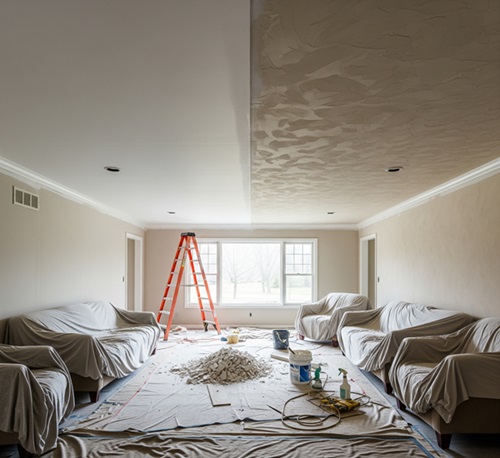
Even experienced DIYers make mistakes when patching drywall. Here are the most common pitfalls: **Not feathering joint compound wide enough.** The most visible drywall patches are the ones where the compound wasn't spread far enough from the patch edge. Each coat should extend 2-3 inches wider than the previous one. **Skipping primer before painting.** Joint compound and spackle are porous — they absorb paint differently than the surrounding wall. Without primer, your patch will show as a dull spot (called "flashing") even under multiple coats of paint. **Using the wrong compound for the job.** Lightweight spackle is great for nail holes but lacks the strength for larger repairs. For anything over an inch, use proper joint compound. **Over-sanding.** Aggressive sanding can damage the surrounding drywall paper, creating a texture mismatch that shows through paint. Use light pressure and fine-grit sandpaper. **Ignoring texture matching.** If your walls have orange peel, knockdown, or any other texture, you'll need to replicate it on the patched area. Smooth patches on textured walls are immediately noticeable. If you want to avoid these pitfalls entirely, our <a href="/services/drywall-repair">drywall repair professionals</a> handle the entire process — from patching drywall to texture matching and painting preparation.
When to Call a Professional for Your Wall Patch
While small drywall patches are manageable for most homeowners, there are situations where professional help is the smarter choice: - **Multiple holes or damage across several rooms** — A pro can complete the work in a fraction of the time with consistent quality. - **Ceiling patches** — Working overhead with joint compound requires experience and specialized techniques to avoid sags and drips. - **Water-damaged areas** — If the drywall got wet, there may be hidden mold or structural damage that requires proper assessment before patching. - **High-visibility areas** — Living rooms, hallways, and entryways demand flawless repairs that blend invisibly with surrounding walls. - **Textured walls** — Matching existing textures like knockdown, orange peel, or skip trowel requires specialized tools and technique. Whether you're in <a href="/locations/new-york/new-york-city">New York City</a> or <a href="/locations/arizona/phoenix">Phoenix</a>, our team provides expert drywall patch repair with guaranteed results. We match textures, blend finishes, and ensure every wall patch is completely invisible once painted. Contact us for a free estimate on your drywall repair project.
Need Professional Drywall Help?
Contact Fast Fix Drywall Repair for a free estimate on your next project.
Get a Free QuoteLooking for drywall repair services in your area? Browse our full service directory by city.