Homes built before 1978 may contain lead paint that becomes hazardous during drywall repair. Federal regulations require specific safety protocols to protect occupants.
The Lead Paint Risk During Drywall Repair
Lead-based paint was used extensively in residential construction until it was banned for consumer use in 1978. Any home built before that date may have lead paint on its walls and ceilings, often buried under multiple layers of newer paint. Drywall repair activities — sanding, scraping, cutting, and demolishing — disturb these paint layers and release lead dust and chips into the living environment. Lead dust is extremely fine and spreads easily through the air and on surfaces, where it can be ingested or inhaled by occupants. Children under six and pregnant women are at highest risk for lead poisoning, which can cause developmental delays, behavioral problems, and serious health complications. Homeowners in [New York City](/locations/new-york/new-york-city) and [Buffalo](/locations/new-york/buffalo), where pre-1978 housing stock is extensive, must be especially vigilant about lead paint safety during any drywall repair project.
Federal RRP Rule Requirements
The EPA's Renovation, Repair, and Painting Rule requires that any contractor performing work that disturbs more than six square feet of painted surface in a pre-1978 home must be EPA-certified and follow specific lead-safe work practices. This is not optional — it is federal law, with penalties of up to $37,500 per day per violation. The rule requires contractors to provide homeowners with the EPA pamphlet on lead paint hazards before work begins, post warning signs, contain the work area to prevent dust migration, use HEPA-filtered equipment for sanding and vacuuming, clean the work area to specific standards after completion, and pass a clearance test before removing containment. Homeowners should verify that any contractor working in their pre-1978 home holds a current EPA RRP certification.
Testing for Lead Before Starting Work
Before beginning drywall repair in a pre-1978 home, testing for lead paint is the prudent first step. EPA-certified contractors can perform on-site testing using XRF analyzers that provide instant results without damaging the surface, or by collecting paint chip samples for laboratory analysis. Home test kits are available but are less reliable and may produce false negatives. If lead is present, lead-safe work practices must be followed for the entire repair. If testing confirms no lead, standard repair practices can be used. The small cost of testing — typically under a hundred dollars for several surfaces — is insignificant compared to the health risks of unknowing lead exposure and the legal liability of performing unprotected work in a lead-painted home.
Lead-Safe Repair Techniques
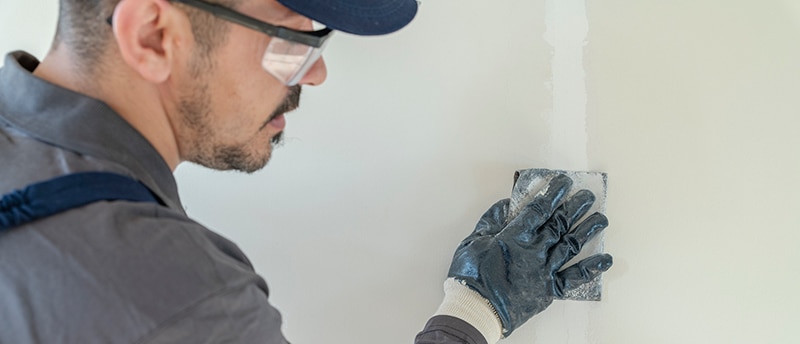
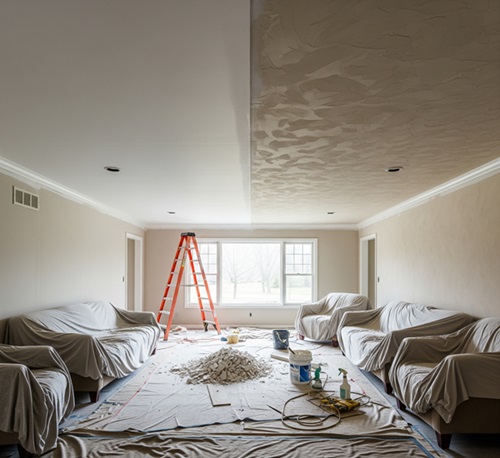
When lead paint is present, drywall repair techniques must be modified to minimize dust generation and contain any dust that is produced. Wet sanding produces less airborne dust than dry sanding. HEPA-filtered power sanders capture dust at the source. Chemical paint strippers remove paint without sanding. Cutting drywall with a utility knife produces less dust than sawing. The work area must be sealed off from the rest of the home with plastic sheeting, and HVAC vents in the work area must be sealed to prevent dust from entering the duct system. Our [drywall repair](/services/drywall-repair) team in [Rochester](/locations/new-york/rochester) and [Syracuse](/locations/new-york/syracuse) is EPA RRP-certified and follows all required lead-safe work practices for pre-1978 homes.
Cleanup and Clearance Standards
The cleanup phase after lead-safe drywall repair is as critical as the repair itself. All visible dust, chips, and debris must be collected and disposed of as lead waste in sealed, labeled containers. Surfaces within the work area are cleaned using a three-pass system: HEPA vacuum all surfaces, wet-wash all surfaces with a lead-specific cleaning solution, and HEPA vacuum again. After cleaning, a clearance test using dust wipe samples verifies that lead dust levels are below EPA action levels. Only after passing clearance can the containment be removed and the area returned to normal use. Homeowners in [Albany](/locations/new-york/albany) and [Yonkers](/locations/new-york/yonkers) should insist on clearance testing documentation from their contractor, which provides verification that the space is safe for occupancy.
Protecting Your Family During Lead-Related Repairs
Beyond the contractor's lead-safe practices, homeowners can take additional steps to protect their families. If possible, vacate the repair area — and ideally the entire home — during active work and cleanup. This is especially important for households with young children or pregnant women. Remove personal belongings, toys, and food from the work area before containment goes up. After the contractor passes clearance, run your HVAC system's fan on continuous mode for several hours to filter any residual airborne particles. Wash hands frequently, especially before eating. If you notice dust outside the containment area during work, alert the contractor immediately — containment failure requires work stoppage and expanded cleanup. These precautions, combined with a certified contractor following proper lead-safe practices, ensure that necessary drywall repairs do not create health hazards in your home.
Need Professional Drywall Help?
Contact Fast Fix Drywall Repair for a free estimate on your next project.
Get a Free QuoteLooking for drywall repair services in your area? Browse our full service directory by city.