Smooth, Level 5 modern walls show every imperfection a drywall repair creates. This guide covers the techniques pros use to make patches genuinely invisible under direct light.
Why Smooth Walls Are So Unforgiving
Modern interior design has moved toward smooth, texture-free wall finishes — sometimes called Level 5 finish in drywall terminology. These walls look sleek and contemporary, but they reveal every drywall imperfection in a way that textured walls forgive. On a knockdown or orange peel wall, a slightly uneven patch hides among the surface variation. On a Level 5 smooth wall lit by raking light from a large window or recessed lighting, the same patch shows as a visible shadow, ripple, or paint flash. Getting invisible repairs on smooth walls requires: - Perfectly flat surface preparation - Wider-than-normal compound feathering - Full skim coats around patches - Identical roller technique to match the original surface stipple - Matched primer and paint products In design-forward markets like <a href="/locations/california/los-angeles">Los Angeles</a>, <a href="/locations/new-york/new-york-city">New York City</a>, and <a href="/locations/illinois/chicago">Chicago</a>, smooth-wall repair is one of the highest-skill specialties in residential drywall work.
Achieving a Perfectly Flat Patch Surface
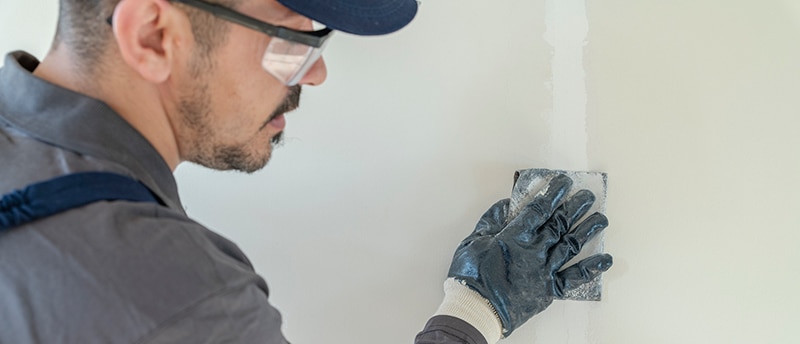
The first requirement for an invisible smooth-wall repair is that the patched area must be perfectly flat — not just visually flat, but actually flat enough that a straightedge laid across the patch shows no gap or hump. **Best practices for patch flatness:** 1. **Use a true straightedge.** A 4-foot drywall T-square or a long aluminum level lets you check flatness across the entire patched area. 2. **Apply compound in thin layers.** Multiple thin coats produce a flatter result than one or two thick coats. Plan for 4–6 coats on a smooth-wall repair. 3. **Use a wide knife for finishing.** A 12-inch or 14-inch finishing knife distributes pressure across a broader area, producing a flatter pass. 4. **Sand between every coat.** Lightly sand each coat smooth before applying the next. This catches small imperfections before they build up. 5. **Check with raking light.** Hold a flashlight or work light parallel to the wall during finishing. Any ridge, dip, or trowel mark will cast a shadow. This is slow, patient work. A smooth-wall patch that takes 30 minutes on a textured wall may take 2–3 hours plus drying time on a Level 5 surface.
Wide Feathering: The Secret to Invisible Patches
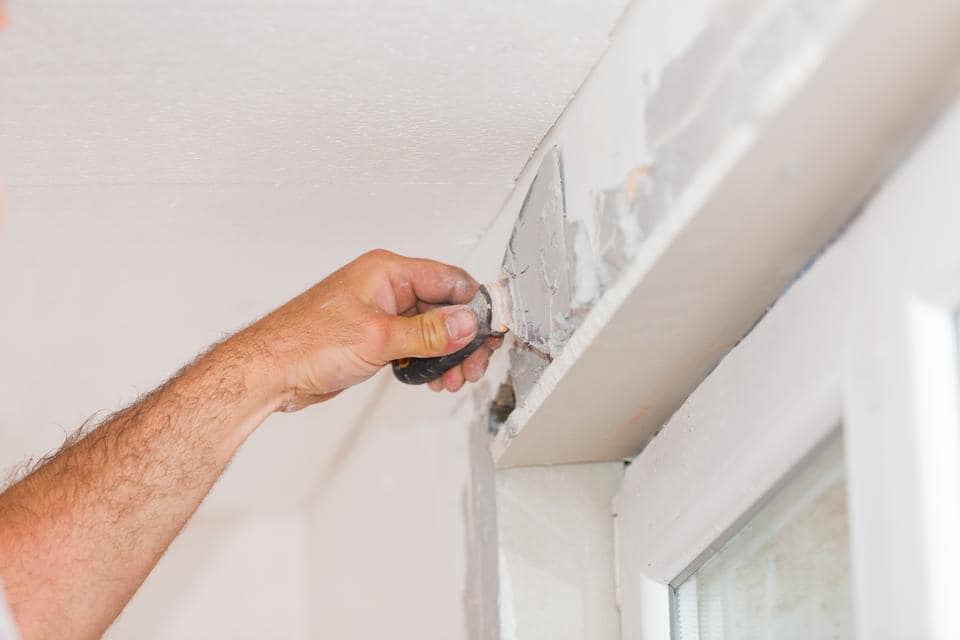
On a smooth wall, the transition from patch to original surface needs to be much wider than on a textured wall — typically 18 to 36 inches beyond the patch perimeter in all directions. **Feathering technique:** 1. **Apply the first coat over the patch only.** Use a 6-inch knife. The goal is to fill any voids in the immediate patch area. 2. **Apply the second coat 8 inches wider** than the first in all directions, using a 10-inch knife. 3. **Apply the third coat 14–16 inches wider** than the second, using a 12-inch knife. 4. **Apply a final skim coat 24–36 inches wider** than the third coat, using a 14-inch or wider knife or a flat box. 5. **Sand each coat smooth** before applying the next. The wider you feather, the more invisible the transition. This is why a small drywall patch repair on a smooth wall ends up affecting a 3-foot circle of the wall — the feathering has to be wide enough that no edge of the compound is visible. For repairs in very high-visibility areas, some pros skim coat the entire wall from corner to corner. This eliminates any possible transition line at the cost of more material and time. In luxury homes in <a href="/locations/florida/miami">Miami</a> or <a href="/locations/california/san-diego">San Diego</a>, full-wall skim coats are standard for Level 5 repairs.
Matching the Original Wall's Surface Texture
Even smooth walls have a subtle surface texture — usually the stipple left by the original paint roller. A perfectly skimmed and sanded patch creates a glass-smooth surface that doesn't match the surrounding wall's slight texture, making the patch visible. **Replicating roller stipple:** 1. **Identify the original roller texture.** Examine an undamaged area of the wall in raking light. Note the size and pattern of the stipple — most walls have either a fine 1/4-inch nap stipple or a slightly coarser 3/8-inch nap stipple. 2. **Prime the patched area** with the same primer used on the original wall (or a high-quality primer rated for use under your finish paint). 3. **Apply paint with a matching nap roller.** If the original is 3/8-inch nap, use 3/8-inch nap. The roller texture itself replicates the surrounding wall's stipple. 4. **Roll out the entire feathered area**, not just the patch. The boundary of the rolled area should fall in a corner, at a trim line, or at another visual break. 5. **Apply two coats** for proper coverage and consistent stipple. Using a foam roller or a different nap than the original almost always shows. The roller texture is the final piece of the invisibility puzzle.
Color Matching and Lighting Considerations
Even a perfectly textured patch can show if the paint color doesn't match exactly. Color matching on smooth walls is more demanding than on textured walls because the eye sees larger uniform areas. **Best practices for color matching:** 1. **Use the same paint product the wall was originally painted with.** Take a sample to the paint store — even within a single brand and color, different lines (flat, eggshell, satin, low-VOC, etc.) appear slightly different. 2. **If the wall is more than a few years old**, the original color has likely faded slightly. A fresh batch of the original color will look brighter than the surrounding wall. 3. **Test paint on cardboard first.** Hold the painted cardboard against the wall to verify the match before painting the patch. 4. **Consider repainting the entire wall.** If the color match isn't perfect, the only way to avoid visible flashing is to paint the whole wall from corner to corner. **Lighting considerations:** - Patches in areas lit by direct sunlight or sconces show more than patches in evenly lit areas. - Walls with large windows are the hardest to patch invisibly — the raking light from morning or evening sun highlights every micro-imperfection. - LED lighting reveals more texture variation than incandescent lighting due to its sharper light quality. For critical visual areas, repainting the entire wall is often the only path to an invisible repair.
When to Hire a Smooth-Wall Specialist
Smooth-wall repair is a specialty skill, even within the drywall trade. Not every drywall contractor can deliver truly invisible Level 5 patches under raking light. **Hire a smooth-wall specialist when:** - The repair is in a highly visible area (entry foyer, great room, primary bedroom feature wall). - The lighting includes large windows, recessed lights, or wall sconces that produce raking light. - The wall finish is a recently popular ultra-smooth or limewash style where any imperfection breaks the aesthetic. - You've attempted DIY repair and the patch is visible despite multiple attempts. - The home is being staged for sale or photography where visible repairs hurt value or marketing materials. Our <a href="/services/drywall-finishing-texturing">Level 5 finishing specialists</a> handle smooth-wall repair in luxury homes, photo studios, and design-forward residences across the country. Whether your project is in <a href="/locations/new-york/new-york-city">New York City</a>, <a href="/locations/california/los-angeles">Los Angeles</a>, or <a href="/locations/florida/miami">Miami</a>, we deliver patches that disappear completely. Call (818) 918-2397 for a quote.
Need Professional Drywall Help?
Contact Fast Fix Drywall Repair for a free estimate on your next project.
Get a Free QuoteLooking for drywall repair services in your area? Browse our full service directory by city.