Tall walls in stairwells and two-story spaces are among the most crack-prone surfaces in any home. Their height amplifies structural movement and makes repairs challenging.
Why Stairwell Walls Are Crack Magnets
Stairwell walls and two-story walls are disproportionately prone to cracking for several reasons. Their height — often 16 to 20 feet or more — means they span from foundation to roof, experiencing the full range of building movement. They are typically hung with multiple panels stacked vertically, creating horizontal butt joints that are inherently weaker than the factory-tapered edges on the long sides of panels. The framing behind these tall walls often includes transitions between floor systems, where the upper floor joists sit on a ledger or bearing wall that can move independently of the wall framing below. Stair stringers attached to the wall transmit foot traffic vibration directly into the drywall. Homeowners in [Indianapolis](/locations/indiana/indianapolis) and [Fort Wayne](/locations/indiana/fort-wayne) with two-story foyers and open stairwells frequently deal with recurring cracks in these challenging locations.
Common Crack Patterns in Tall Walls
Tall walls produce distinctive crack patterns. Horizontal cracks at the junction between floors — where the upper wall framing meets the lower wall framing over the floor system — are caused by differential movement between the two floor levels. Diagonal cracks running from the upper corner of a stair opening outward toward the ceiling indicate stress concentration at the opening's header. Vertical cracks along butt joints between stacked panels result from the panels shrinking or the framing deflecting. Cracks along the stair stringer line are caused by the stringer flexing under foot traffic and transmitting that movement to the drywall. Each pattern has a specific cause and requires a targeted repair approach.
Repair Techniques for Recurring Stairwell Cracks
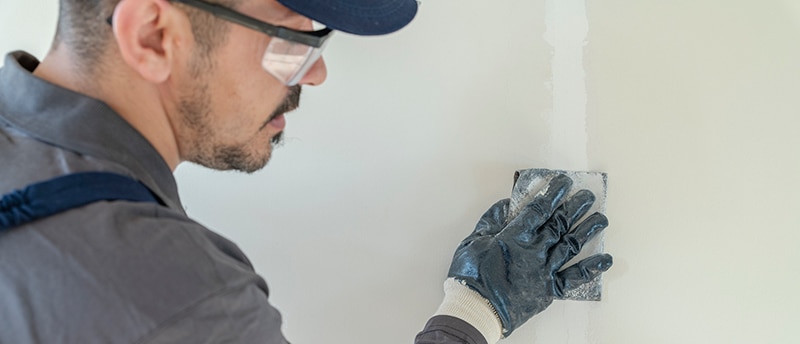
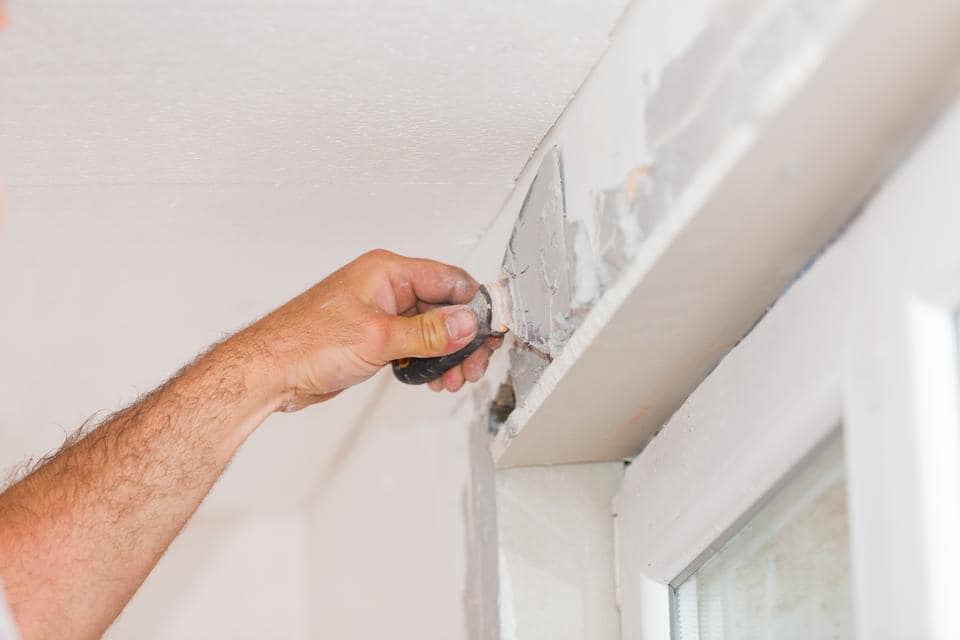
Standard tape-and-compound repairs on tall walls often fail within a year because the underlying movement continues. Lasting repairs require flexible techniques. For horizontal cracks at floor transitions, install a flexible control joint or use elastomeric caulk — these accommodate ongoing movement without cracking. For diagonal stress cracks, use wide fiberglass mesh reinforcement extending 12 inches beyond the crack in all directions, combined with setting-type compound for maximum crack resistance. For butt joint cracks, apply a thin strip of fiberglass mesh over the joint, followed by compound applied with an extra-wide knife — 14 inches or more — to create the wide feathering needed for an invisible repair on a flat surface. Our [drywall repair](/services/drywall-repair) team uses specialized tall-wall techniques in [Evansville](/locations/indiana/evansville) and [South Bend](/locations/indiana/south-bend) to deliver lasting results in these demanding locations.
The Access Challenge: Working at Height
Stairwell drywall repair is complicated by the access challenge of reaching heights of 16 to 20 feet in a space where the floor level changes along the length of the wall. Standard ladders cannot be set up safely on stairs, and scaffolding must be specially configured with adjustable legs to maintain a level platform over the stairway. Some contractors use specialized stairwell scaffolding systems designed specifically for this application, while others use pump jacks or multi-position ladders rated for stairwell use. Working overhead at significant heights with joint compound, tools, and sanding equipment requires physical stamina and safety awareness that makes professional help strongly recommended for stairwell repairs.
Minimizing Future Cracking in Tall Walls
Several construction details reduce future cracking in tall walls. Floating the drywall at the floor-level transition — allowing the panel to span the junction without fasteners in the transition zone — lets the joint move without restraint. Installing expansion control joints at floor transitions provides a designed location for movement that remains attractive. Using adhesive in combination with screws to attach drywall on tall walls reduces reliance on individual fasteners and distributes loads more evenly. Allowing new framing to complete its initial shrinkage period before applying final finishes reduces the severity of first-year cracking. These techniques, applied during initial construction or as part of a major repair, significantly extend the time between crack maintenance cycles.
When Full Refinishing Is the Better Option
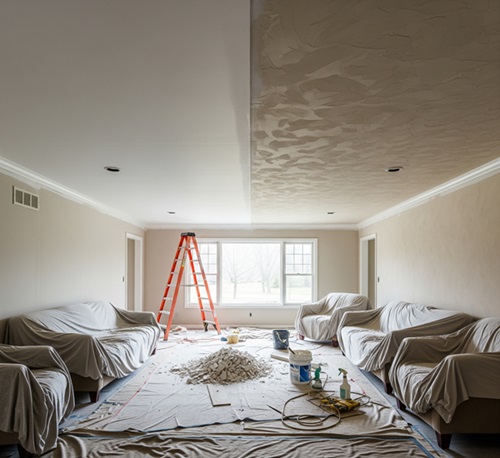
If a stairwell wall has accumulated years of patched cracks — each repair adding layers of compound that create a bumpy, uneven surface — sometimes the most cost-effective and visually satisfying solution is to skim coat the entire wall or replace the panels entirely. A full skim coat creates a uniform, smooth surface that conceals all previous repairs and provides a fresh canvas for painting. Full panel replacement eliminates all old damage and allows installation of floating details and control joints that were not present in the original construction. The access equipment is already set up for the work, so the incremental cost of addressing the entire wall versus patching individual cracks is often modest. This approach is particularly worthwhile in homes being prepared for sale, where a clean, crack-free stairwell wall makes a strong first impression.
Need Professional Drywall Help?
Contact Fast Fix Drywall Repair for a free estimate on your next project.
Get a Free QuoteLooking for drywall repair services in your area? Browse our full service directory by city.