When heavy wall-mounted items pull free, they leave behind significant drywall damage. Proper repair and reinforced remounting prevent the problem from recurring.
Why Heavy Objects Pull Out of Drywall
Drywall is not designed to support weight on its own. A standard half-inch panel can hold only about five pounds per fastener when hung with a simple nail or screw into the drywall alone — far less than most people assume. When heavy objects like large mirrors, floating shelves, televisions, and towel bars are mounted directly into drywall without hitting a stud or using appropriate anchors, the gypsum core eventually crumbles around the fastener, and the item comes crashing down. The resulting damage typically includes a torn or enlarged hole, cracked surrounding drywall, and sometimes damage to the item itself and the floor below. Homeowners in [Boston](/locations/massachusetts/boston) and [Worcester](/locations/massachusetts/worcester) encounter this problem frequently, especially in older homes where multiple generations of residents have mounted and remounted items in the same wall areas.
Assessing the Damage Before You Repair
The repair approach depends on the extent of the damage. A small anchor hole — from a plastic expansion anchor or a toggle bolt that pulled through — is a straightforward patch job. Larger holes where a section of drywall has torn away around a shelf bracket or TV mount require a more substantial repair, potentially involving a drywall patch or replacement of a section of panel. Before beginning the repair, remove any remaining anchors, screws, or mounting hardware from the wall. Check the area around the damage for cracks that radiate outward — these often extend several inches beyond the visible hole and need to be addressed as part of the repair to prevent them from showing through the finished surface.
Patching Anchor Holes and Small Damage
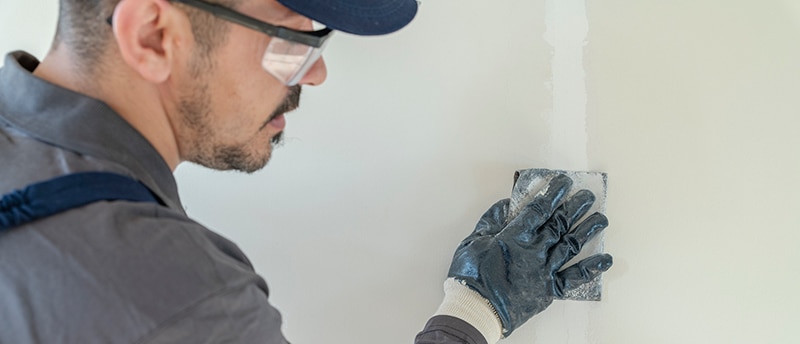
For holes up to about two inches in diameter, a simple fill-and-sand approach works well. Clean out any loose gypsum debris from the hole, then press setting-type joint compound firmly into the cavity. If the hole passes completely through the panel, place a small piece of mesh tape or a backing piece behind the hole first to provide support for the compound. Build up the compound in thin layers, allowing each to dry before applying the next. Two to three coats with light sanding between them will bring the surface flush with the surrounding wall. For [Springfield](/locations/massachusetts/springfield) and [Cambridge](/locations/massachusetts/cambridge) homeowners dealing with multiple small anchor holes across a wall, batch all the patches at once — fill them all, let them dry, sand them all, and then apply the second coat. This is far more efficient than doing one at a time.
Repairing Large Torn-Out Sections
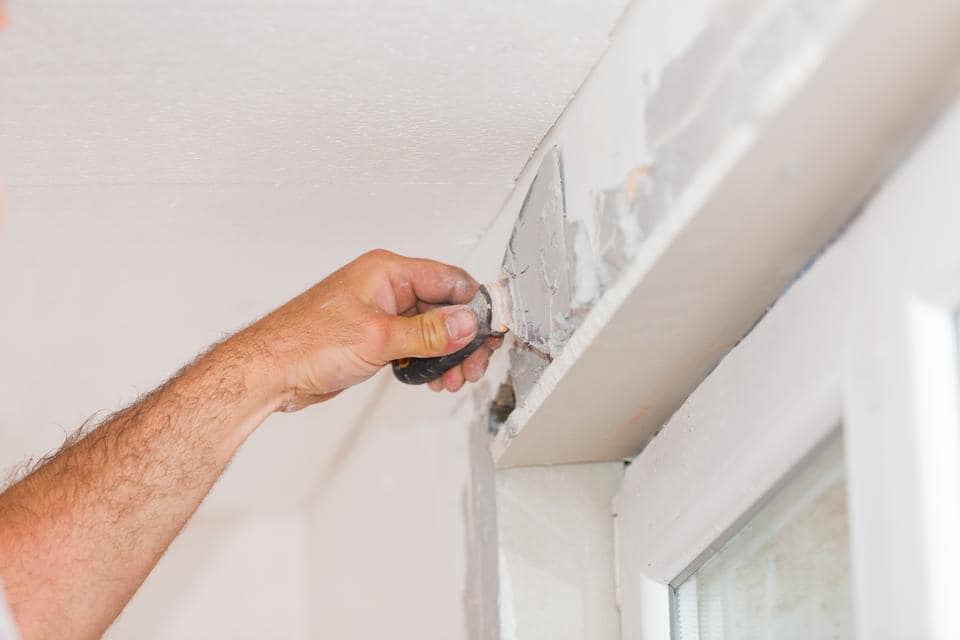
When a heavy item has torn a section of drywall away — leaving a hole larger than a few inches or an irregularly shaped damaged area — a proper patch is needed. Cut the damaged area into a clean rectangle using a drywall saw, extending to the nearest stud on at least one side. If no stud is close, install backing blocks of wood behind the existing drywall on each side of the opening to provide fastening support for the patch. Cut a piece of new drywall to fit the opening, secure it with drywall screws, and tape all seams with paper or mesh tape. Apply multiple coats of compound, feathering each coat wider than the last for an invisible transition. Our [drywall repair](/services/drywall-repair) team handles these repairs daily, delivering patches that disappear completely once painted.
Properly Mounting Heavy Objects to Prevent Future Damage
The best repair is one you never have to make again. When remounting heavy items after a repair, always use the right hanging method for the weight. Items under 15 pounds can use standard picture hangers or small wall anchors. Items between 15 and 50 pounds should use toggle bolts, snap toggles, or heavy-duty wall anchors rated for the weight. Items over 50 pounds — including large televisions, heavy mirrors, and loaded bookshelves — must be mounted into wall studs using lag screws or structural screws. A stud finder is an essential tool for locating framing, and the small investment pays for itself the first time it prevents a mount failure. For wall-mounted televisions, use a mount rated for the TV's weight and attach it to at least two studs whenever possible.
Reinforcing Walls for Future Mounting
If you know that a particular wall area will need to support heavy items, reinforcing the wall during a repair is a smart investment. Installing a piece of three-quarter-inch plywood between the studs and behind the drywall creates a solid mounting surface across the entire reinforced area, allowing fasteners to be placed anywhere rather than only at stud locations. This technique is commonly used for bathroom vanity areas, TV mounting walls, and kitchen areas where heavy cabinets will be installed. Homeowners in [Lowell](/locations/massachusetts/lowell) and [Quincy](/locations/massachusetts/quincy) who are renovating or finishing spaces can ask their contractor to install plywood backing in areas designated for heavy wall-mounted items — it adds minimal cost during construction but eliminates future anchor failures entirely.
Need Professional Drywall Help?
Contact Fast Fix Drywall Repair for a free estimate on your next project.
Get a Free QuoteLooking for drywall repair services in your area? Browse our full service directory by city.